
Last updated November 15, 2026
 Wrought iron
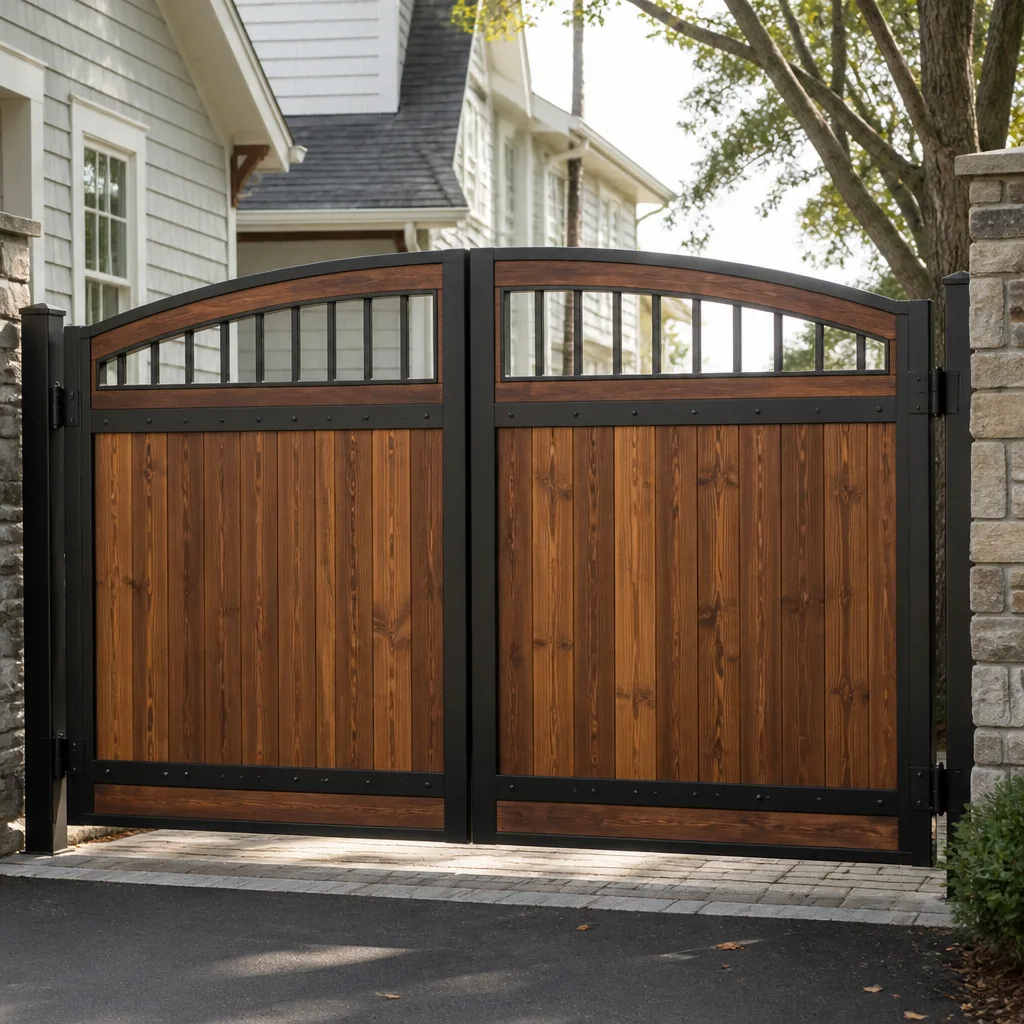 Wood & steel frame
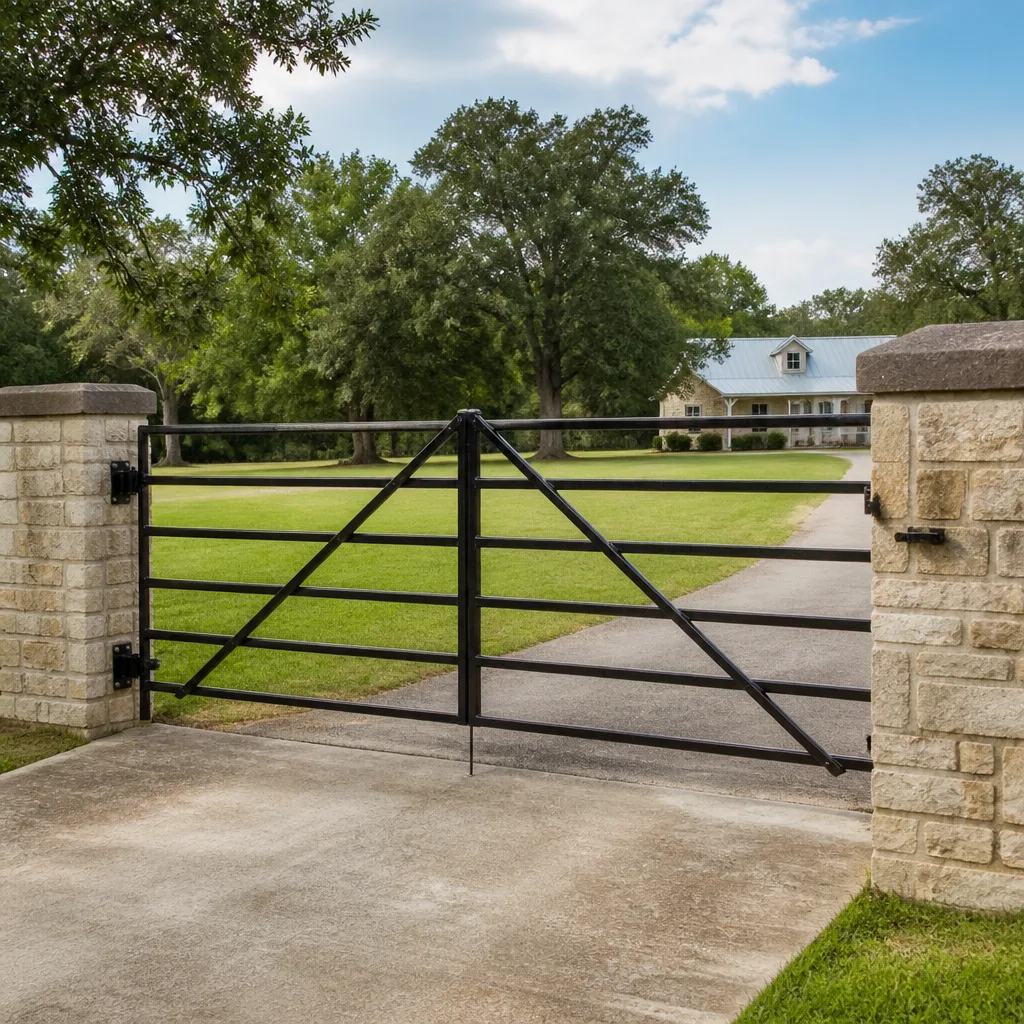 Farm & ranch
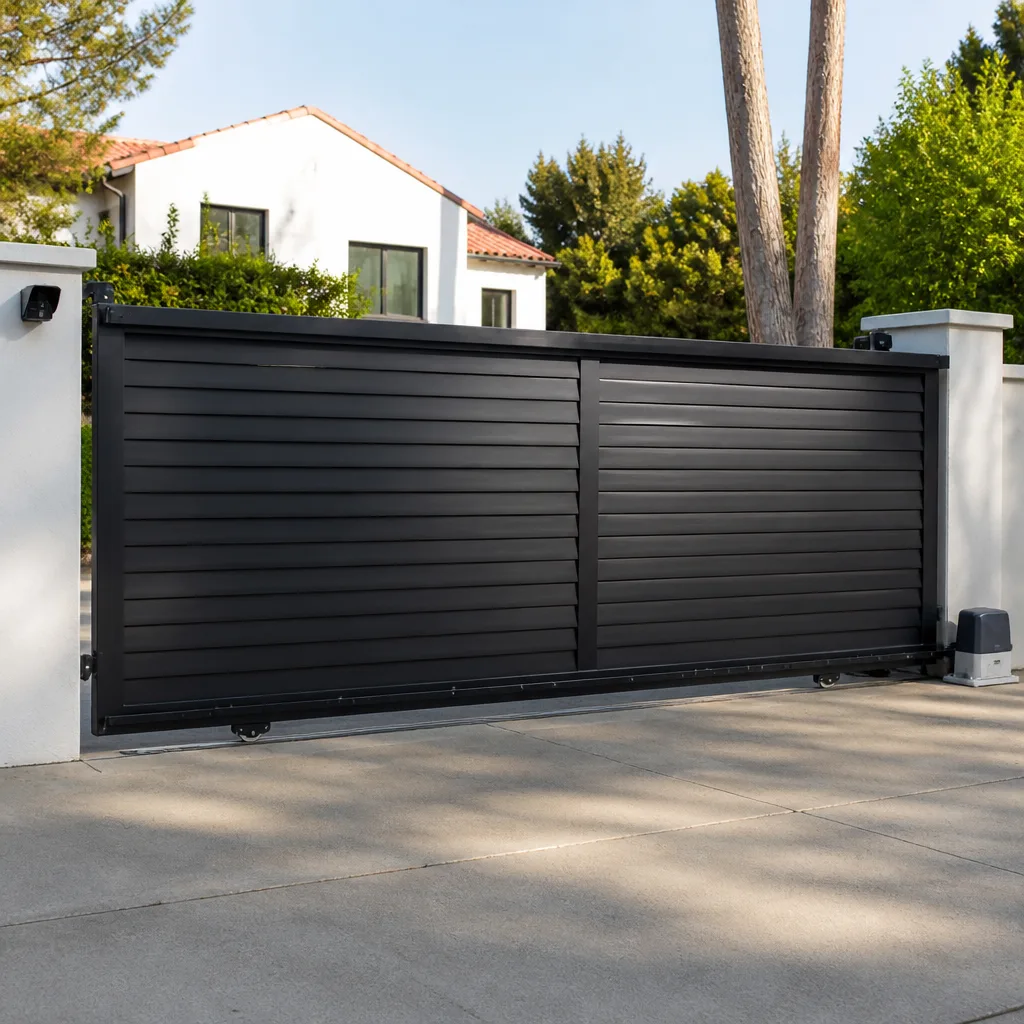 Sliding driveway gates
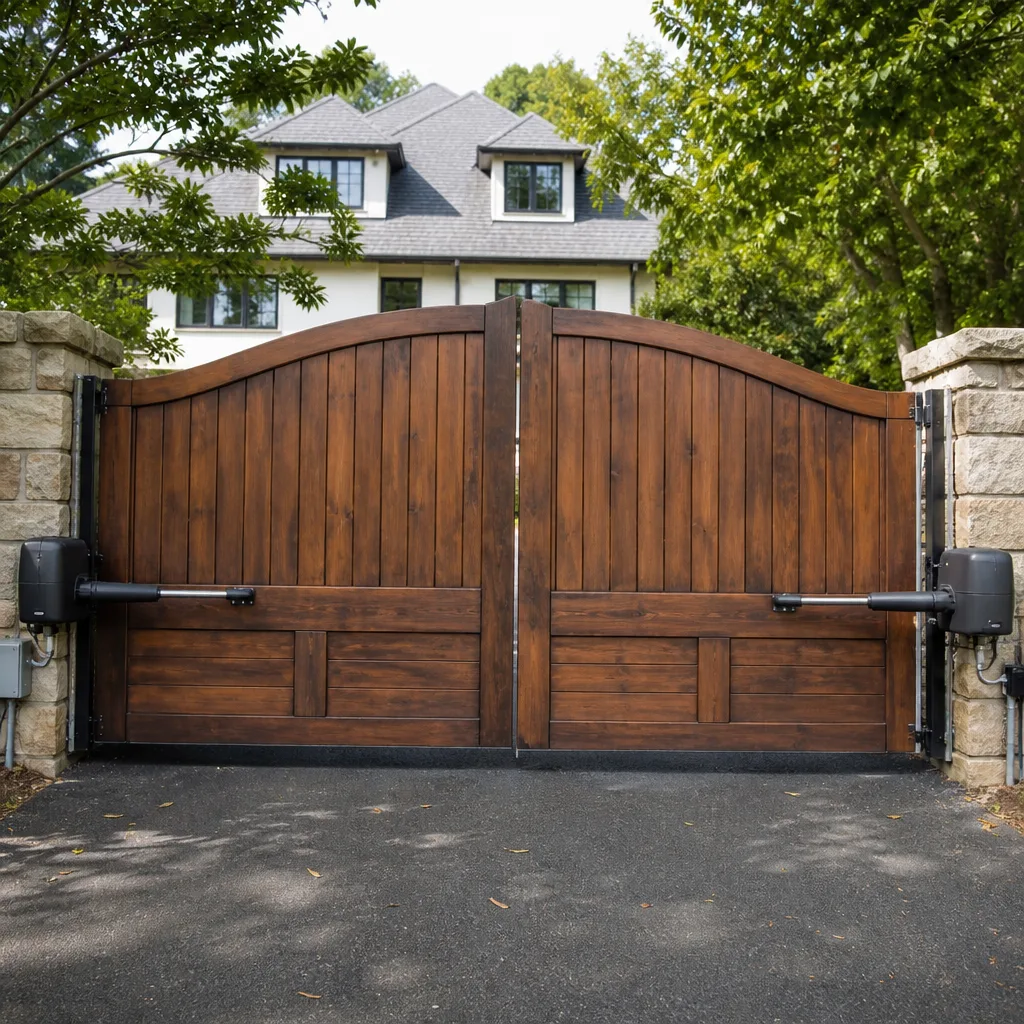 LiftMaster operators
Free on-site gate assessment - hinges, posts, and your LiftMaster or Nice gate operator checked before anything is quoted
The assessment is free and the quote is the invoice.
Get your free estimateGate Repair Maintenance Checklist for Killeen Homeowners
Most gate owners in Killeen spend their attention on the things that break loudly. The gate that won’t open. The arm that grinds. The remote that stopped working. The tasks that actually prevent those failures are quiet, quick, and almost always skipped. Here’s the one that matters most: lubricating the chain or belt drive takes about four minutes and heads off the single most expensive automated gate repair there is, because a dry chain wears the sprocket and stretches until the whole drive has to come apart. In this guide, we walk through a maintenance checklist built for Central Texas conditions – the expansive clay soil under your posts, the 100°F-plus summers, the storm-season humidity – so you’re checking the things that actually fail here, not the items copied from a national template.
Quick Answer
A practical gate maintenance checklist for a Killeen home runs monthly, quarterly, and annually. Monthly: lubricate the drive chain or belt, clear debris from the track path, and check the safety reversing feature. Quarterly: test the operator force settings, inspect post footings and frame alignment, and clean the control board connectors. Annually: have a technician inspect wiring, the operator, and the control board, and adjust the gate’s travel limits. Killeen’s clay soil and summer heat stress gates in ways that make these checks more than routine – they’re what keeps the repair bill down.
Styles & brands we work with
- Wrought iron
- Wood & steel frame
- Farm & ranch
- Sliding driveway gates
- LiftMaster operators
Table of Contents
- Why a Killeen Gate Needs a Different Checklist
- The Monthly Checklist: Four Minutes That Save a Drive
- The Quarterly Checklist: Force Settings and Footings
- Clay Soil and Your Gate Posts: The Alignment Problem
- Control Board and Wiring: The Summer Humidity Protocol
- DIY vs. Technician: What You Can Safely Do
- Seasonal Calendar for Central Texas
- When to Call a Professional
Why a Killeen Gate Needs a Different Checklist
A gate maintenance checklist written for a mild, stable climate doesn’t fit Killeen. Two local conditions change the picture. First, the expansive clay soil common across Central Texas swells when it’s wet and shrinks when it’s dry, and that seasonal movement shifts the posts your gate hangs from. A gate that tracked perfectly in spring can bind against the frame by late summer, and the operator works harder every time it tries to close. Second, Killeen summers routinely push past 100°F, which stresses the motor, the control board, and the lubricant on your drive chain all at once.
Fort Hood traffic patterns add a third layer. Homes near the post and along the main corridors see heavy daily vehicle cycles, and a gate that opens and closes dozens of times a day wears its drive and its operator faster than a gate on a quiet cul-de-sac. Maintenance intervals here should reflect how hard your gate works, not just the calendar.
The good news is that none of this is complicated to manage once you know what to look for. Below, we’ve built the checklist around what we actually see fail in Killeen homes and small commercial properties: dried chains, racked gates, corroded control board connectors, and force settings run too high as a shortcut. If you own a Ghost Controls, DoorKing, Elite, or Mighty Mule system, or any of the brands we work on, the checklist applies the same way – gate repair in Killeen starts with understanding the specific system in front of you.
The Monthly Checklist: Four Minutes That Save a Drive
Start with the drive. Lubricating the chain or belt is the highest-value task on this list, and it’s the one almost everyone skips. A dry chain grinds against the sprocket, stretches, and eventually wears the drive to the point where repair means replacing components instead of a quick service. Four minutes with the right lubricant once a month prevents that. Here’s the full monthly routine:
- Lubricate the chain or belt drive. Apply a gate-specific or chain lubricant, not WD-40 – a light oil that penetrates and stays put. Wipe off the excess so grit doesn’t stick.
- Clear the track path. Sweep or blow out leaves, dirt, and debris from the track or the swing path. Sliding gates collect grit at the base of the track; swing gates collect it at the hinge.
- Test the safety reversing feature. With the gate in motion, place an object in its path (or block the safety sensor, if your gate uses one). The gate should stop and reverse. If it doesn’t, stop using the gate and call a technician – this is a safety failure.
- Look and listen. Run the gate one full cycle. Listen for grinding, squealing, or uneven travel. Any new sound is a signal to schedule a look.
- Check the hardware. Look for loose bolts on hinges, brackets, and the operator mount. Tighten anything clearly loose by hand; leave structural hardware to a technician.
That’s the whole monthly list. Do it on the same day each month so it becomes habit. For a clearer picture of what monthly service looks like on your specific system, see our gate repair service overview.
The Quarterly Checklist: Force Settings and Footings
Every quarter, go deeper. The most important diagnostic step on this entire checklist is testing and documenting your operator’s force settings. Force settings control how much pressure the operator applies to move the gate. As the drive wears, as the posts shift, or as the gate gets heavier with dirt and moisture, the operator needs more force to do the same job. If someone has cranked the force settings up to compensate, the operator is hiding a problem that’s getting worse – and it’s also pressing harder on anything in the swing path, which is a safety concern.
Here’s how to test and document force settings on most operators:
- Locate the force adjustment on your operator (consult your owner’s manual – position and method vary by brand, from Ghost Controls to Elite).
- Note the current setting in a notebook or on your phone.
- With the gate in manual release mode, move the gate by hand through its full travel. It should move smoothly with light effort. If it feels heavy or binds, that’s a mechanical issue that force settings can’t fix.
- Re-engage the operator and run a full cycle. If the same settings suddenly need more force to complete the cycle, the drive or the gate itself has changed.
- Record the date and the setting each quarter. A steady creep upward over several months is the clearest sign of wear – the one diagnostic that reveals motor wear before it becomes a failure.
Alongside force testing, check the post footings and frame alignment each quarter. We cover that separately below, because it deserves its own section for Killeen.
Clay Soil and Your Gate Posts: The Alignment Problem
Expansive clay soil is the biggest hidden threat to a Killeen gate. When the soil gets wet, it swells. When it dries out through a hot summer, it shrinks. Across a season, that movement can shift a gate post by enough to rack the gate out of square with its track or its hinges. A racked gate doesn’t just look off; it binds, forces the operator to work harder, and eventually wears the drive and the operator mounts.
Here’s what to check seasonally:
- Look at the gate gap. A consistent gap between the gate and the frame on both sides is normal. A gap that’s wider at the top than the bottom (or vice versa) means the post has moved.
- Check for dragging. A sliding gate that scrapes the track or a swing gate that drags at the bottom has likely shifted on its posts.
- Inspect the footings. Look for visible cracks in the concrete around the post base, or soil that’s pulled away from the footing. Note that footings need to reach proper depth to resist this movement – a shallow footing is the first thing to fail.
- Watch the latch alignment. If the latch suddenly needs a shove to engage, the gate has shifted.
- Check after heavy rain and again in dry stretches. The seasonal swing is the window when movement shows most clearly.
Post and frame corrections are a technician job. Re-setting or re-aligning posts is structural work, and doing it wrong makes the problem worse. What you can do is spot the problem early and book the fix before the gate and the operator both wear out.
Control Board and Wiring: The Summer Humidity Protocol
Killeen’s storm season and summer humidity drive a spike in control board and connector corrosion. The symptoms start small – an intermittent fault, a remote that works sometimes, a gate that opens but won’t close on one cycle – and they get blamed on the remote or the receiver when the real issue is a corroded connector on the board. For electric and automated gates, this is the failure mode most generalists miss, because they don’t work on control boards often enough to recognize it.
A basic visual inspection each quarter (with the power off) helps:
- Look at the board. With power off and the cover open, check for white or green crust on connectors and terminals. That’s corrosion.
- Check the wiring at the operator. Look for chafed insulation, loose terminal screws, and any splice that looks hastily done. Spliced wiring in an outdoor enclosure is vulnerable to moisture.
- Look at the safety devices. Photo-eyes, loop detectors, and safety edges all have wiring that gets stressed by heat and moisture. Check that connections are tight and housings are intact.
- Note any recurring fault codes. If your operator displays a fault code, write it down and the conditions when it appears. That log saves diagnostic time and often identifies the exact connector or component.
Do not work on a live control board or on the power wiring to the operator. Electrical gate work carries real risk, and the wiring run – from the power source to the operator – should be handled by someone trained for it. Connector cleaning and board diagnostics are the kind of electric gate repair that keeps an aging operator running instead of replacing it.
DIY vs. Technician: What You Can Safely Do
Most of the monthly checklist is safe to do yourself. Some of the quarterly and annual tasks are not, and knowing the line protects both your gate and your warranty. Here’s how the work splits:
Safe to do yourself:
- Lubricating the chain, belt, and moving hardware
- Clearing debris from the track and swing path
- Testing the safety reversing feature and the safety devices
- Tightening loose bolts by hand
- Recording force settings, fault codes, and observations
- Visual inspection of posts, footings, wiring housing, and the board (power off)
Technician work:
- Adjusting force settings or travel limits
- Re-setting or re-aligning posts and footings
- Control board diagnostics, connector repair, and component replacement
- Any work on the power wiring to the operator
- Operator repair or replacement
- Safety device repair or replacement (photo-eyes, loops, edges)
One more caution: DIY work on certain components can void an operator’s warranty, especially where the manufacturer requires an authorized service record for board or operator repair. Before you attempt anything on the board or wiring, check your manual. If the line isn’t clear, a technician can tell you quickly. Our technicians have up to 13 years of experience across brands including DoorKing, Elite, and FAAC, and we diagnose by brand logic rather than guessing at how a specific board handles faults.
Seasonal Calendar for Central Texas
Killeen’s seasons drive which checklist items matter most month to month. Here’s a simple calendar to keep your gate ahead of the conditions:
- Spring (heavy rain season): This is when clay soil swells most. Check footings, gap alignment, and latch fit after every significant rain. Watch for gate binding that appears suddenly.
- Early summer (first heat): Heat stresses the operator and the control board. Do a full force-setting test and record it. Clean the track thoroughly before the hot months.
- Midsummer (100°F-plus): Check the drive chain or belt for drying and reapply lubricant on schedule. Heat is hard on lubricant. Check the operator housing for airflow – don’t let debris block ventilation.
- Late summer storm season: Humid storm weather drives connector corrosion. Do the control board inspection and note any fault codes. Check that the operator housing closure is intact.
- Fall (temperature swings): Watch for gap changes as the soil shifts. Do the full quarterly check including footings and force settings. This is a good time for the annual technician inspection.
- Winter (mild, wet): Wet periods continue the soil movement. Clear leaves and debris from the track. Check that drains and drainage paths near the gate aren’t backing up against the posts.
An annual technician visit is the anchor of this calendar. Have it done at the same time each year so you have a baseline for comparison. A technician can adjust travel limits, check the operator’s internals, and identify issues that aren’t visible from the outside.
Common Mistakes to Avoid
- Skipping the chain or belt lubrication. It’s the highest-value, lowest-cost task, and skipping it is how a cheap service becomes an expensive drive replacement.
- Reaching for WD-40 instead of a proper lubricant. WD-40 displaces moisture but doesn’t lubricate a drive; it attracts grit and dries out. Use a gate-specific or chain lubricant instead.
- Cranking up the force settings instead of fixing the problem. If the gate needs more force than before, something has changed – a worn drive, shifted posts, or a gate that’s gotten heavier. Raising force settings hides the problem and increases the load on the operator and anything in the gate’s path.
- Ignoring a gate that binds in the heat. A gate that closes hard in midsummer but works fine in spring has a clay-soil problem on its posts. Left alone, it wears the operator and the gate hardware at the same time.
- Working on a live control board or power wiring. This is the one DIY line that should never be crossed. Electrocution risk is real, and a mistake can damage an expensive board.
- Forgetting that a Killeen gate on a hard-working driveway needs more frequent checks. A gate that cycles dozens of times a day near Fort Hood’s traffic corridors wears faster than a gate on a quiet cul-de-sac. Shorten your intervals if your gate works hard.
- Thinking a broken gate just needs a bigger motor. Most “weak operator” complaints are actually a dry drive, a racked gate, or a tired connector on the control board. Diagnose first; replace only when necessary.
See the difference
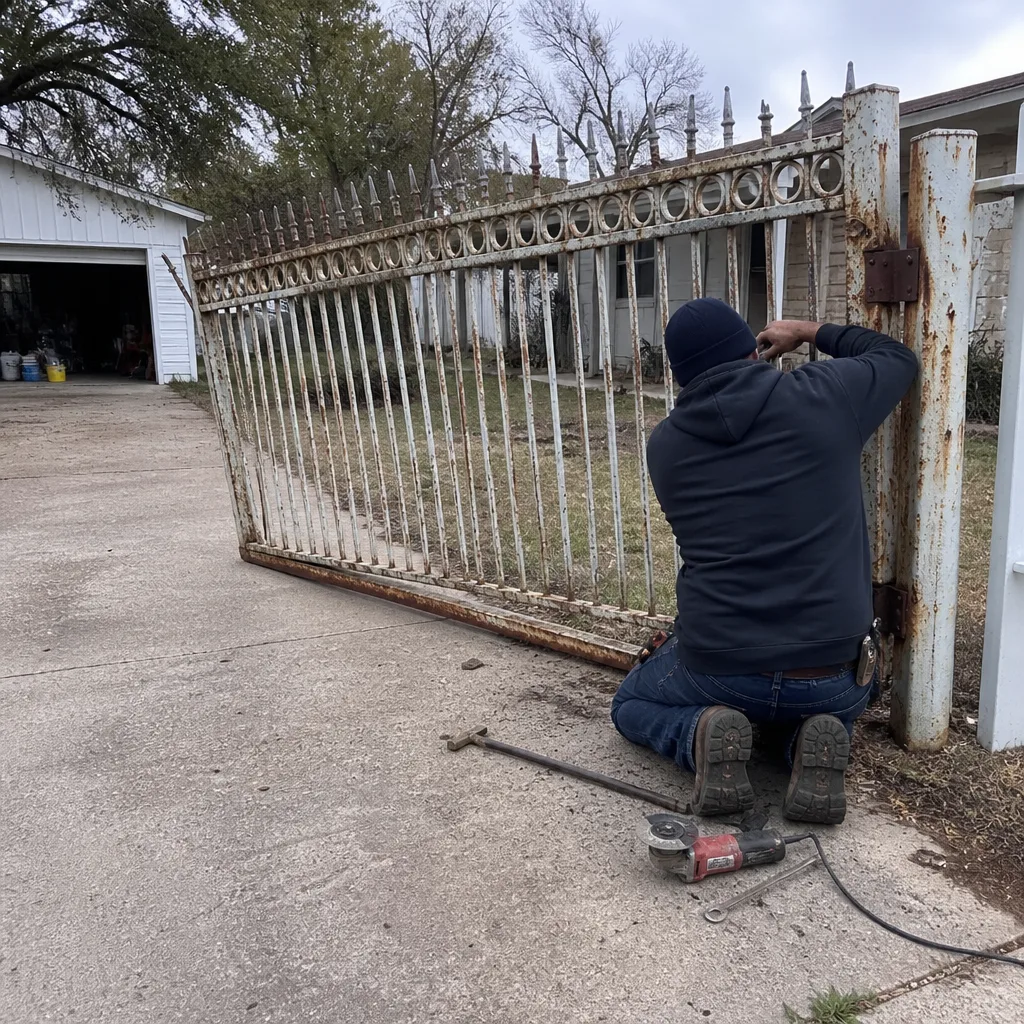 Before
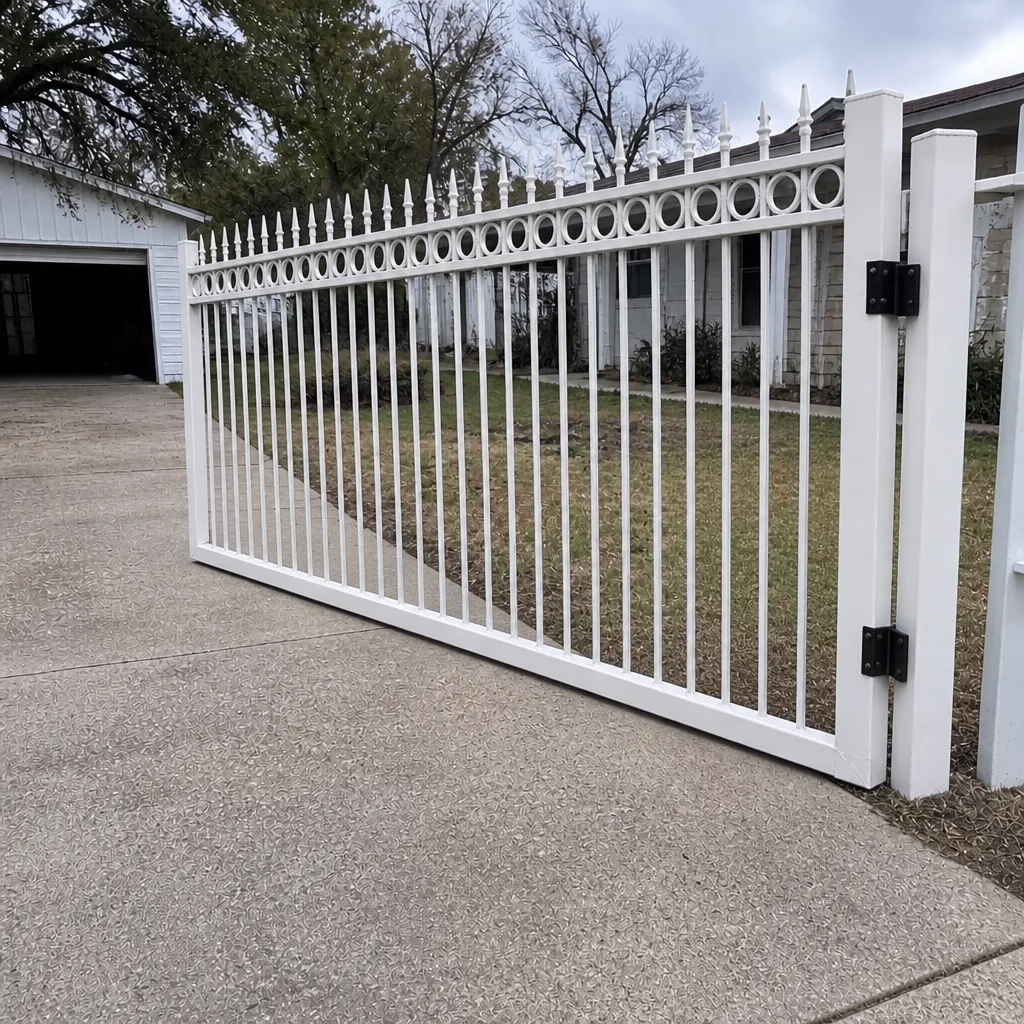 After
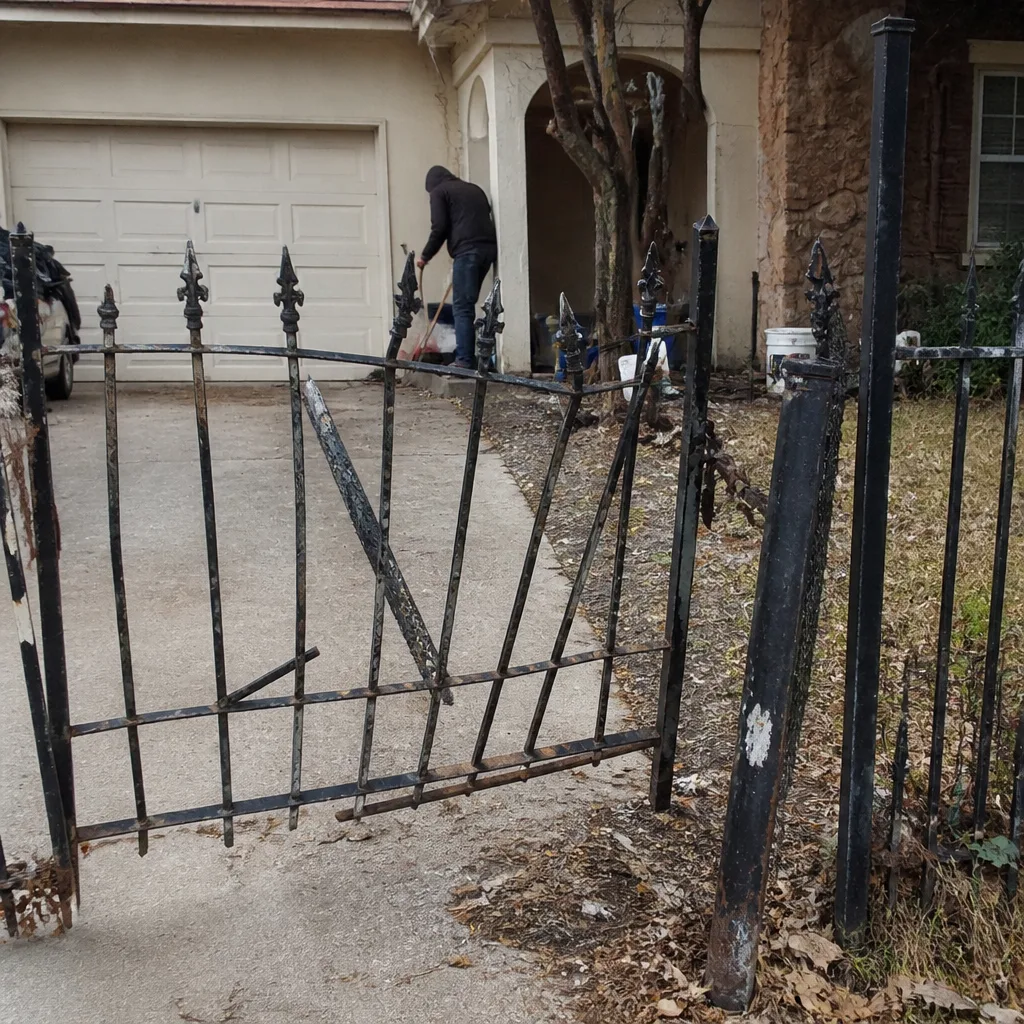 Before
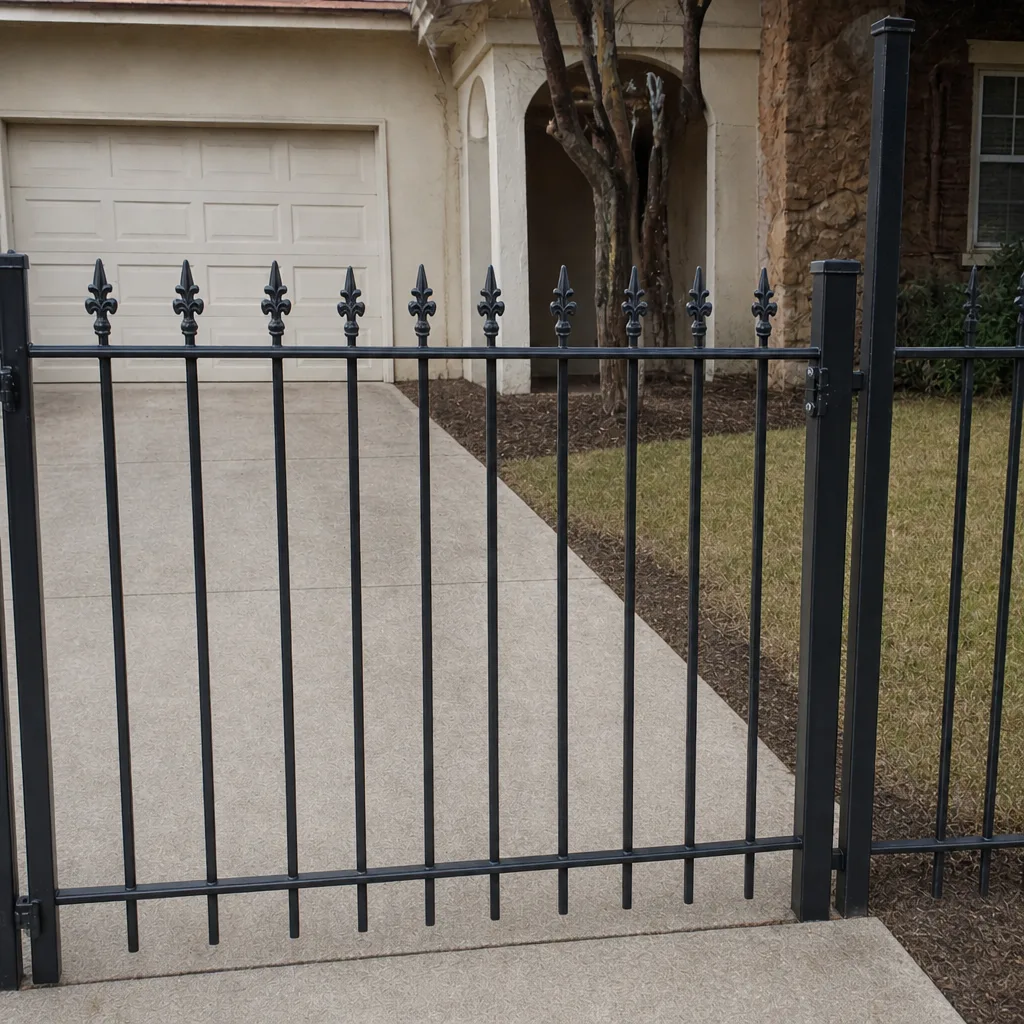 After
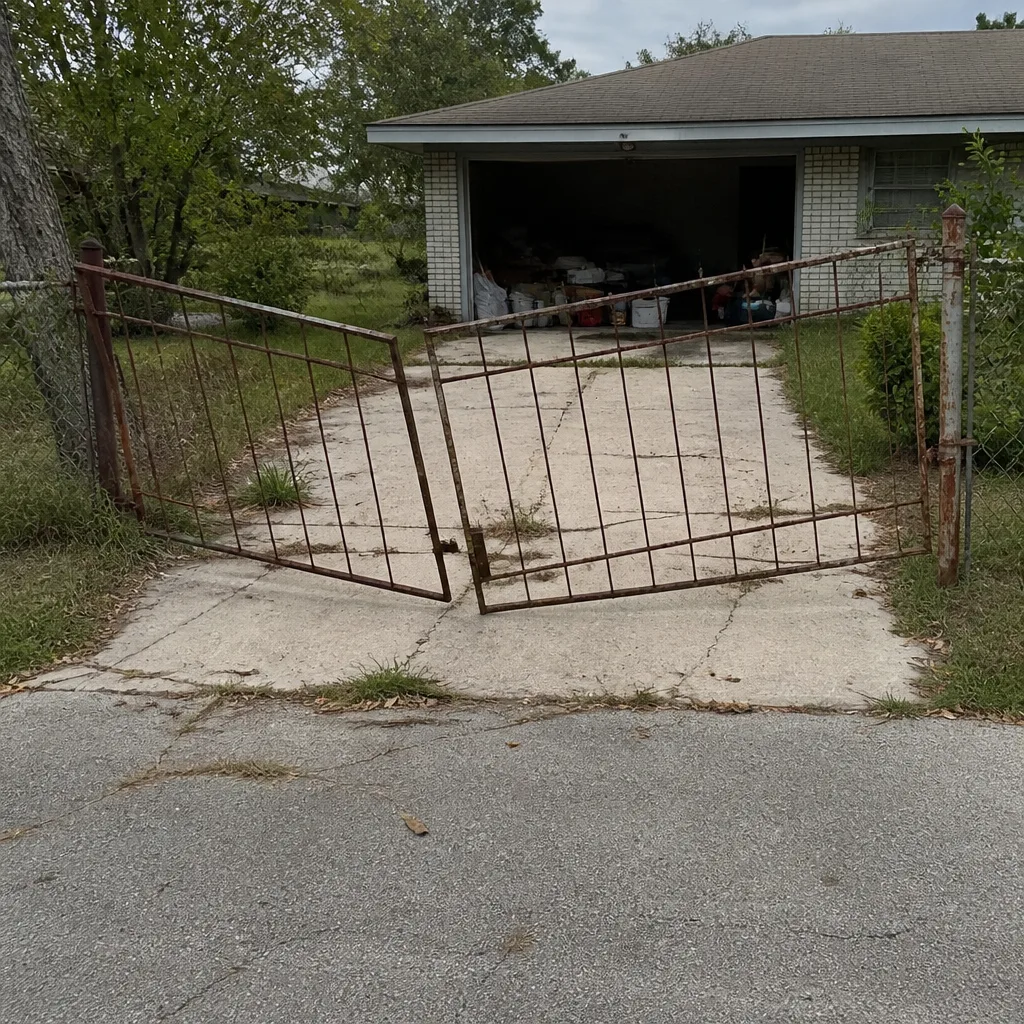 Before
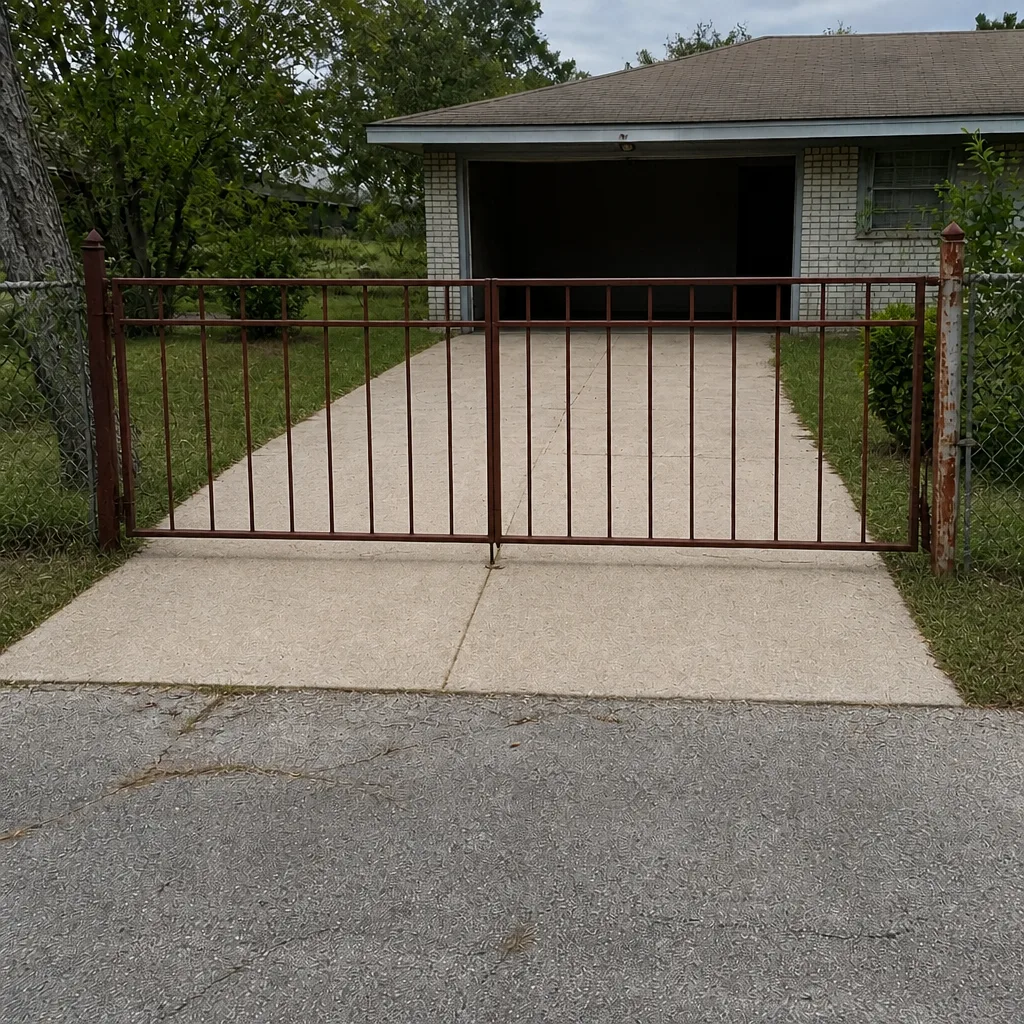 After
When to Call a Professional
Call a technician when the gate fails its safety test, when it drags or binds consistently, when a post has clearly moved, or when you see recurring fault codes on the operator. Any work on the control board, the power wiring, or a safety device is a technician job. If your gate stops opening entirely, or opens but won’t close on one or more cycles, don’t force it. For a Killeen gate, a diagnosis now often prevents a repair later. Killeen homeowners can get a free estimate – call (866) 722-0161. We answer 24/7. Fast dispatch from 7am to 7pm, Sunday through Friday. We work on your brand, not around it, and we diagnose first so you only pay for the repair you actually need.
Frequently Asked Questions
Once a month is the right interval for most residential gates in Killeen. The drive chain or belt is the highest-wear component on an automated gate; a dry chain wears the sprocket and stretches the drive until the whole assembly needs service. In Killeen’s heat, lubricant dries out faster, so don’t stretch it to every other month. Four minutes once a month is the whole job. Call (866) 722-0161 if you’d rather have a technician handle it as part of a service visit.
Homeowners can safely lubricate the drive, clear the track, test the safety reversing feature, tighten loose bolts by hand, and keep a maintenance log. Technician work includes force-setting and travel-limit adjustments, post and footing corrections, control board diagnostics, and any work on the power wiring or safety devices. When in doubt, ask. Call (866) 722-0161 for a free estimate.
We recommend leaving force-setting adjustments to a technician. Force settings affect both wear and pressure on anything in the gate’s path, and a poorly set force is a safety concern. You can – and should – record your current force settings each quarter and watch for a steady creep upward; that creep is the clearest sign of wear. Call (866) 722-0161 if your settings are climbing.
Look for four signs: uneven gaps between the gate and the frame, a gate that drags on the track or the ground, a latch that suddenly needs force, and cracks in the concrete around post footings. Check these after heavy rain and during dry stretches, when the movement shows most clearly. Any of these signs means the posts have likely shifted. Call (866) 722-0161 for an assessment – estimates are free.
Three local conditions shorten the intervals: expansive clay soil that shifts posts, 100°F-plus summers that stress the operator and dry out lubricant, and Fort Hood-area traffic patterns that put heavy daily cycles on a gate. Maintenance intervals should be calibrated to the local climate and how hard your gate actually works. When in doubt, shorten the interval. Call (866) 722-0161 for a look at your specific system.
Homeowner maintenance like lubrication and safety testing doesn’t typically void a warranty, but DIY work on the control board, operator, or power wiring can. Check your owner’s manual before touching anything electrical, and have a technician handle board and wiring work. For brands like DoorKing, Elite, FAAC, or Mighty Mule, we can walk you through what’s covered. Call (866) 722-0161.
The Bottom Line
A Killeen gate needs a maintenance checklist calibrated to Central Texas, not a generic one. Lubricate the chain or belt monthly – that four-minute task prevents the most expensive automated gate repair there is. Test and record your force settings each quarter, because the creep upward is the clearest warning of wear. Check post footings and alignment seasonally, because clay soil moves them. Inspect the control board connectors in summer humidity. Then split the work correctly: handle the safe tasks yourself, and hand the board, wiring, force settings, and post work to a technician. That routine keeps a gate running for years and catches the expensive failures before they start.
When you’re ready for a professional look at your gate, or you want a maintenance visit scheduled, call Gate Repair Killeen at (866) 722-0161 for a free estimate. We answer 24/7. Fast dispatch from 7am to 7pm, Sunday through Friday. Gates only – that’s all we do.
Written by the team at Gate Repair Killeen.