
Last updated November 15, 2026
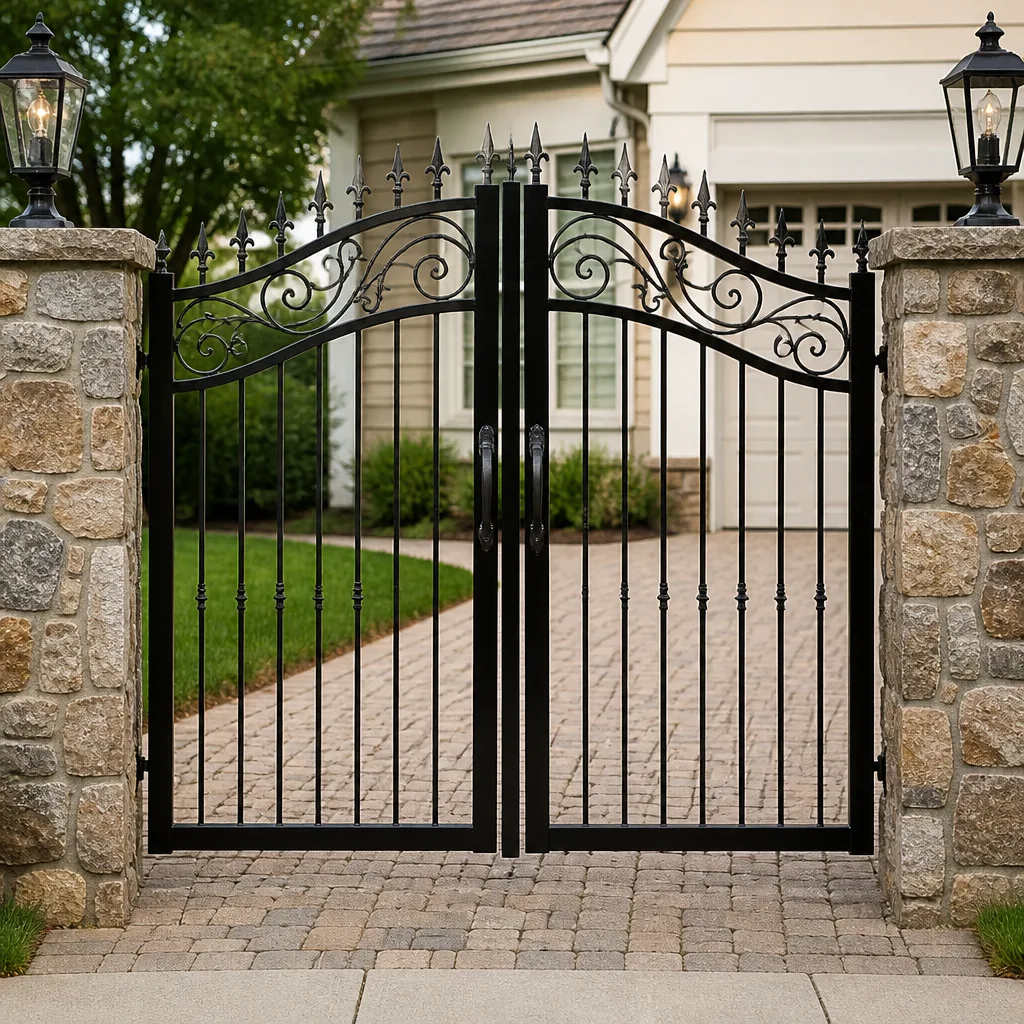 Wrought iron
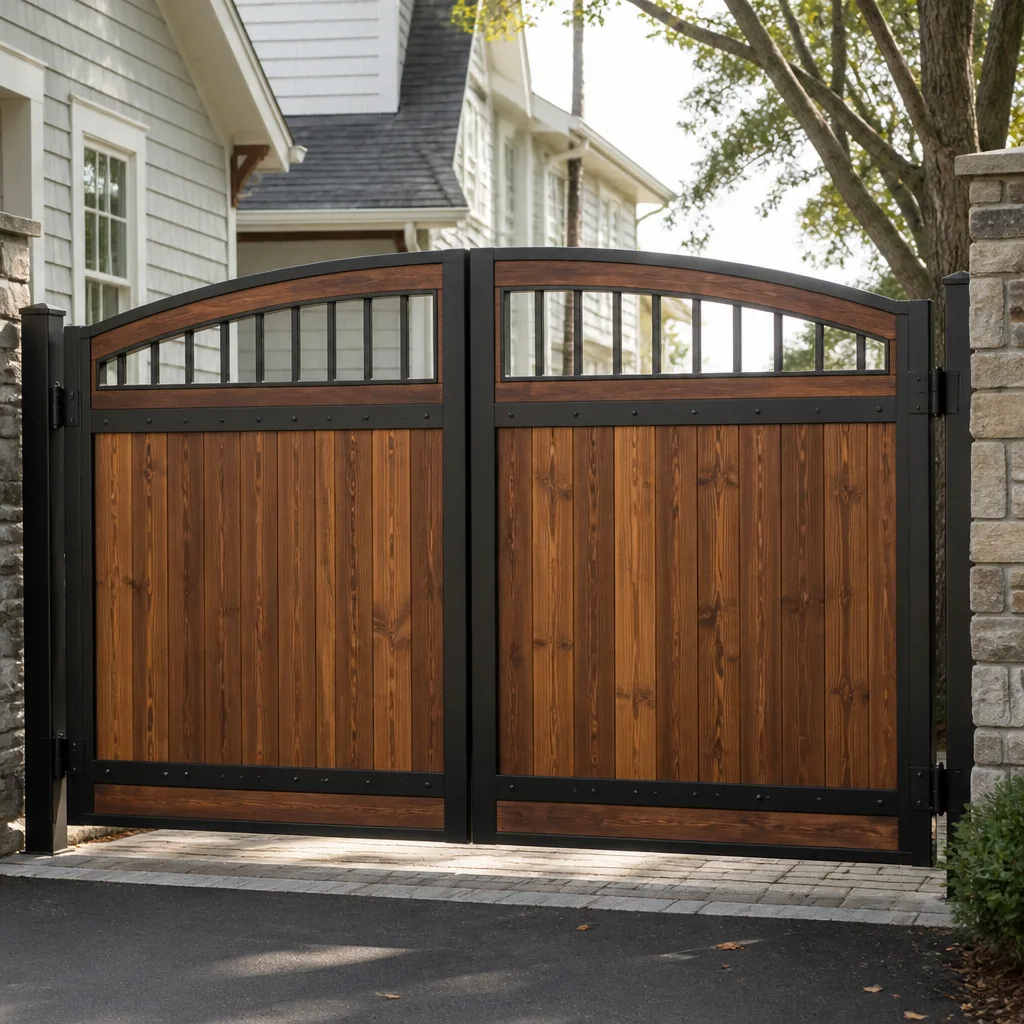 Wood & steel frame
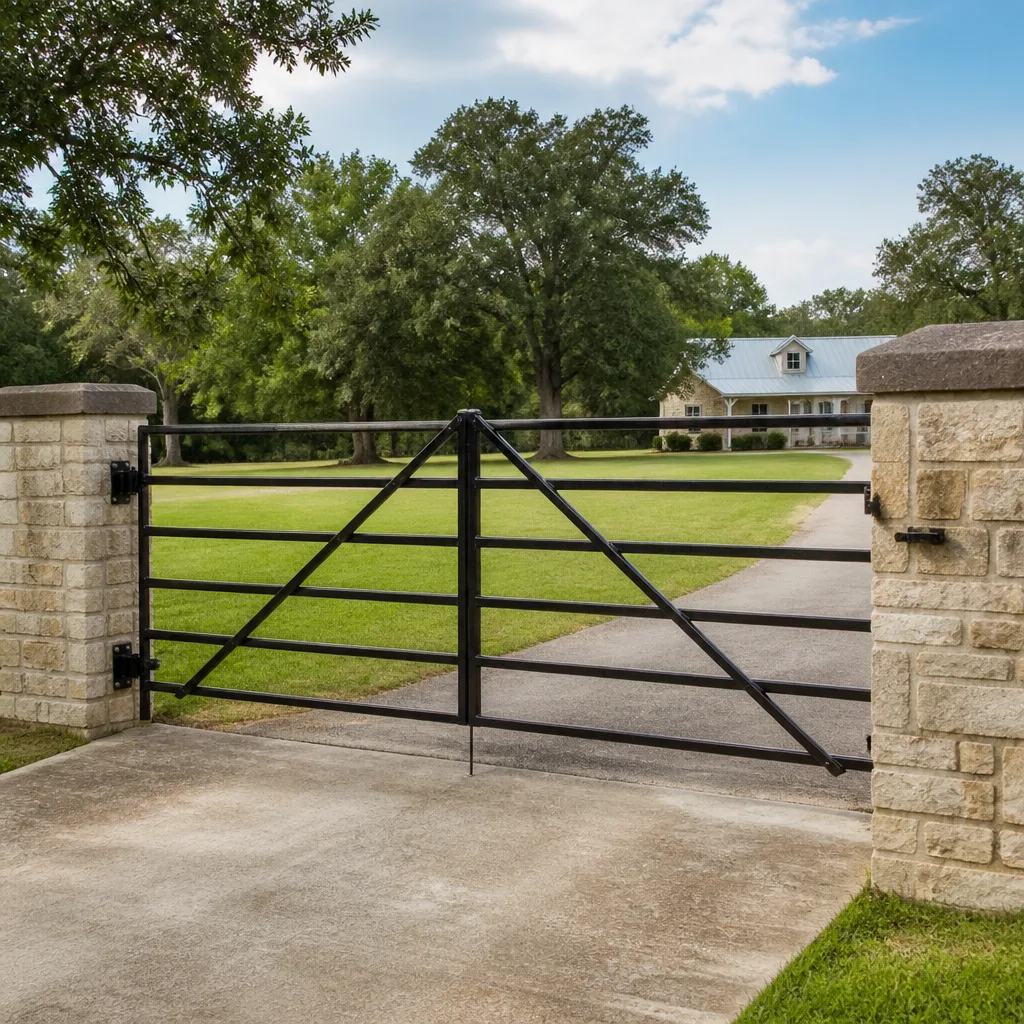 Farm & ranch
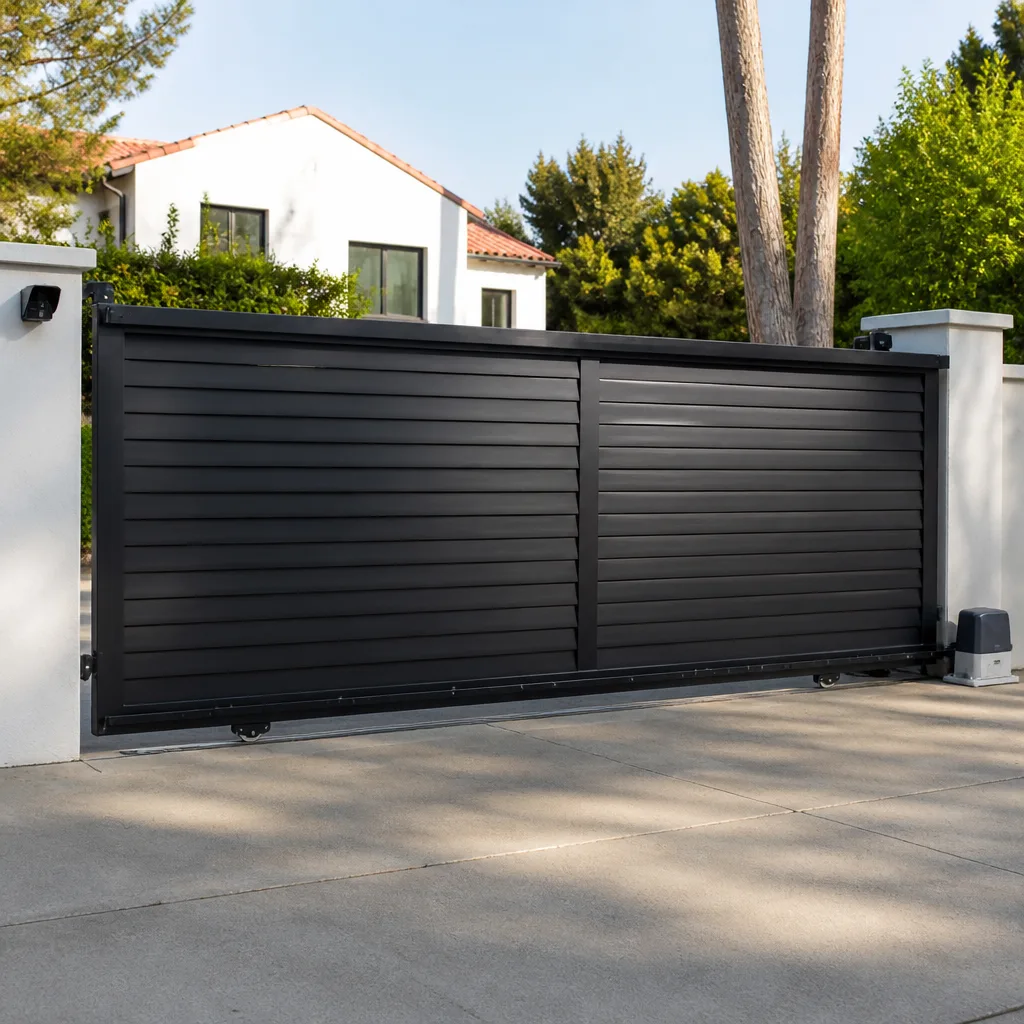 Sliding driveway gates
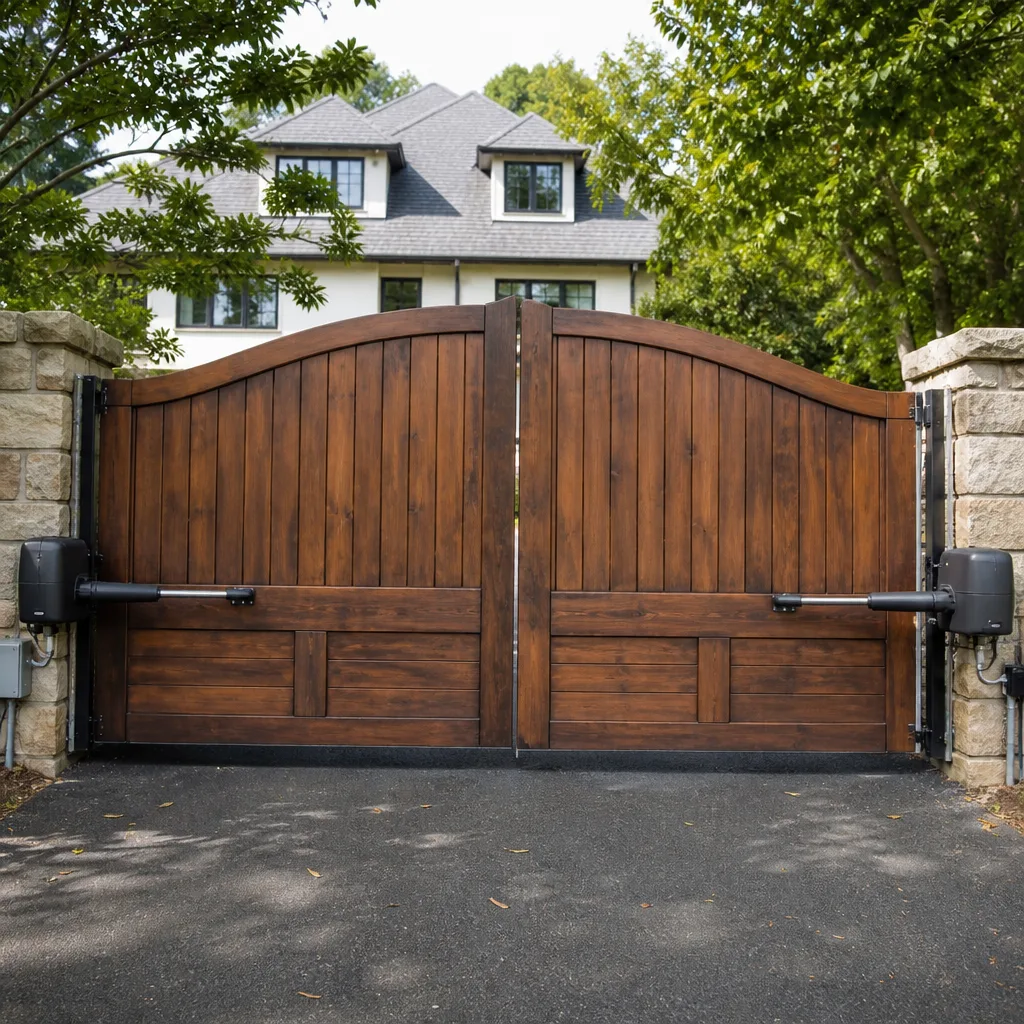 LiftMaster operators
Free on-site gate assessment - hinges, posts, and your LiftMaster or Nice gate operator checked before anything is quoted
The assessment is free and the quote is the invoice.
Get your free estimateGate Repair Troubleshooting in Killeen: Common Problems and How to Fix Them
The gate that just stopped working almost never failed without warning. It usually gave you at least two symptoms first that most homeowners brushed off: a hesitation at one point in the travel, a remote that needed to be pressed twice, a hinge that started to squeak in a new pitch. Those small clues are the trail. This guide is built around a decision-tree approach, so instead of guessing at parts you can narrow almost every gate problem in Killeen down to one of three root causes: power, signal, or mechanical wear. You’ll learn the five-second response test, which resets are safe and which ones create real danger, and how brand logic changes the diagnosis when symptoms look identical.
Quick Answer
Most gate failures in Killeen fall into one of three categories: power (the operator isn’t getting what it needs), signal (the command never reaches the operator, or the safety loop is holding it back), or mechanical wear (hinges, tracks, rollers, and the hardware that carries the gate’s weight). Run a five-second response test first: press the remote and watch how the gate reacts. If it does nothing at all, the problem is usually power or signal. If it moves and then stalls or reverses, it’s usually the board, the safety hardware, or mechanical binding. Knowing which of those two you’re dealing with before you touch anything is most of the diagnosis.
Styles & brands we work with
- Wrought iron
- Wood & steel frame
- Farm & ranch
- Sliding driveway gates
- LiftMaster operators
Table of Contents
- The Symptom-to-Cause Map: Read the Gate Before You Touch It
- Power, Signal, or Mechanical Wear: The Three Root Causes
- The Five-Second Gate Response Test
- Why Killeen’s Heat Cycles Hit Gates Differently
- Safe DIY Resets vs. the Ones That Create Hazards
- Brand-Specific Quirks: Same Symptom, Different Diagnosis
- When to Call a Professional
- Frequently Asked Questions
The Symptom-to-Cause Map: Read the Gate Before You Touch It
Before you open a control box, a gate will tell you where the problem lives if you watch it closely. The trick is separating the symptom you see from the cause behind it. “The gate won’t open” is a symptom. The cause could be a dead battery in the remote, a tripped loop detector, a burned relay on the board, or a hinge that’s bound up so tight the operator can’t overcome the resistance and shuts itself down on a safety trip. Four different fixes, one identical complaint.
Here’s how we map symptoms to categories. When you press the remote:
- Nothing at all happens and there’s no sound from the operator. The command isn’t getting through, or the operator has no power. Signal or power first.
- You hear a click or a hum from the operator but the gate doesn’t move. Power is present, the command arrives, but something downstream is stuck: the operator’s internal mechanism, a bound hinge, or a safety edge holding the gate open.
- The gate starts, then stops or reverses mid-travel. The safety system is reacting to something: a loop detector reading a vehicle, a misaligned photo-eye, a limit switch, or mechanical resistance the operator reads as an obstruction.
- The gate moves but slowly, jerks, or drags at one point. Nearly always mechanical wear on a slide gate’s track or a swing gate’s hinges. The operator is fine; the gate itself is fighting it.
- The gate works from the keypad but not the remote (or the reverse). Signal path issue specific to one input: a worn remote, a fried receiver, a wiring fault on the keypad run.
On a commercial property in Killeen, we see this map save the most time on DoorKing systems tied to access control, where a “broken gate” is often a card reader or loop problem upstream of the gate itself. Read the symptom, place it in a bucket, and you’ve cut diagnostic time in half. If you’d rather have a technician run that map for you, that’s what our Gate Repair Killeen service is for.
Power, Signal, or Mechanical Wear: The Three Root Causes
Almost every gate fault resolves to one of three root causes. When you know which bucket your symptom falls in, you stop replacing parts on a hunch.
Power
Power problems range from a tripped breaker on the circuit feeding the operator to a failed transformer inside the control box to a corroded terminal where the supply meets the board. The gate may be dead, or it may behave erratically because voltage is sagging under load. Solar operators, common on rural lots around Killeen where running conduit is impractical, add another layer: a battery that’s no longer holding a charge mimics a dead operator until you test the battery and panel output separately.
Signal
Signal is anything that carries the “go” command: remotes, keypads, receivers, phone-based access, and the safety loop buried in the driveway. A loop detector is the most misunderstood. It doesn’t just detect a car to hold the gate open. A failed or mis-tuned loop can hold a gate open indefinitely, or prevent it from ever closing, and it looks exactly like a broken operator to a homeowner.
Mechanical wear
Mechanical wear is the gate itself: hinges, rollers, tracks, chains, the mounting posts, and the gate frame. Slide gates wear tracks and rollers. Swing gates wear hinges and the operators that push them. A gate that’s sagged a quarter inch at the latch sees dramatically more resistance, and a modern operator will simply refuse to push through it rather than strip its own gearbox. When we diagnose, we check power and signal with test equipment, then physically move the gate by hand to feel for binding. That last step catches more problems than any meter. It’s the discipline behind our approach to electric gate repair: diagnose first, replace only when necessary.
The Five-Second Gate Response Test
This is the test to run before you call anyone. Stand where you can see the whole gate. Press the remote once and count to five, watching for these signals. What the gate does in those five seconds tells you which part of the system to focus on.
- Press the remote once. Listen for a click from the operator. A distinct click means the receiver is getting the signal and the board is trying to fire the relay. No click means signal or power.
- Watch for any movement in the first two seconds. Movement that starts and immediately reverses points to a safety trip (loop, photo-eye, or edge) or a limit switch set too tight.
- Watch for a stall mid-travel. A stall under load is usually mechanical resistance the operator won’t overcome, or a marginal power supply that can’t carry the motor under load.
- Try the wall button or keypad instead of the remote. If the wall control works and the remote doesn’t, the problem lives in the remote, receiver, or antenna, not the operator.
- Look at the gate’s track or hinges while it moves. Visible wobble, a hop, or a drag point tells you it’s mechanical regardless of what the operator is doing.
Five seconds, and you’ve narrowed the field. Nothing moves and no click: power or signal. Click but no movement: operator or a safety hold. Movement then reverse: safety hardware. Movement then stall: mechanical resistance or sagging voltage. That’s the whole decision tree in its shortest form. For complex or commercial systems where multiple gates and access readers are tied together, a technician runs the same test with the operator’s diagnostics. Call (866) 722-0161 if you’d rather skip to that step, we answer 24/7 and fast dispatch runs from 7am to 7pm, Sunday through Friday.
Why Killeen’s Heat Cycles Hit Gates Differently
Central Texas heat does things to gate hardware that cooler climates never see, and it does them in ways that look like electrical failures. The daily expansion and contraction cycle is the prime suspect. In Killeen, a gate’s metal parts expand through a hot afternoon and contract overnight, and anything mounted with tolerances too tight will start to bind at one end of the day and run free at the other.
Aluminum tracks and thermal expansion
Long aluminum slide-gate tracks move more than most people expect as they heat. A track installed with no allowance for that movement can bow or misalign just enough that the gate’s rollers drag in the warm part of the afternoon and run clean in the morning. That symptom pattern, where the gate “sometimes” sticks and it always seems to be later in the day, is thermal, not electrical. Steel hinge assemblies behave differently: the fatigue is at the weld and the pivot, and it shows up as a sagging gate that needs a lift to latch, especially on heavier swing gates carrying a lot of weight on two hinges.
What heat does to the operator and controls
Control boards and receivers mounted in an unshaded enclosure bake through a Killeen summer. Heat stresses the solder joints and capacitors on a board, and a component that’s marginal at 85 degrees may fail reliably at 110 inside the box. A shaded or ventilated enclosure, or relocating the housing out of direct afternoon sun, prevents a whole category of intermittent mystery faults. Battery-backed operators age faster in heat too, so a solar unit’s battery life is shorter here than the spec sheet implies. None of this is guesswork when you track it: note the time of day and outside temperature when the fault happens, and you’ll often see the pattern yourself. That pattern is one reason we take heat exposure seriously when we service systems across Killeen.
Safe DIY Resets vs. the Ones That Create Hazards
Some resets are safe for a homeowner to try, and some will cost you a control board or put your hand somewhere it shouldn’t be. The line is clear: you can safely reset things that are logical (memory, limits, pairing), and you should never open the operator housing, touch wiring, or work on a live control board.
Safe to try yourself
- Remote re-pairing. If a remote stopped working after a genuine power outage or you replaced its battery, re-pairing it to the receiver is a normal homeowner task. Follow the operator’s manual for the pairing sequence; doing it wrong just means trying again.
- Power-cycle the operator. Turning the operator’s dedicated breaker off for a minute and back on clears a surprising number of transient faults. Confirm which breaker feeds the gate before you flip anything.
- Cleaning the safety photo-eyes. Dust and insect debris on the lenses of a through-beam safety pair trigger false trips. Wipe them and test.
- Manual release to move the gate. Every operator has a manual release to disengage the gate for hand operation. Use it to feel for binding, then re-engage before restoring power.
Do not try yourself
Do not open the operator housing, touch the control board, adjust wiring, or work on anything with the power on. A gate operator runs on line voltage and stores energy; the operator’s wiring and power are genuinely dangerous, and a shock from a live circuit can kill. Beyond the electrical hazard, a gate is a heavy moving panel that can crush, and a slide gate that comes off its track under power is a serious injury waiting to happen. Adjusting limit switches on some operators requires opening the housing; if the manual tells you to open it, stop. Store-bought “fixes” and random board swaps also void warranties and can leave the gate’s safety system disabled without you realizing it. If a reset involves a screwdriver inside a housing, call a professional.
Brand-Specific Quirks: Same Symptom, Different Diagnosis
A gate that stops mid-cycle isn’t one problem. It’s a symptom that each brand’s logic handles differently, and diagnosing it as generic “gate won’t open” wastes time. This is where a gates-only specialist earns their keep: we work on your brand, not around it, because the fault trail on a LiftMaster doesn’t read the same as a Ghost Controls or a Viking.
Take a mid-cycle stop under identical conditions. On a LiftMaster swing operator, a mid-travel stop is often a limit or obstruction-sensing event, and the board’s diagnostic LEDs will usually tell you which: a safety input left open versus an obstruction trip reads differently if you know where to look. On a Ghost Controls solar or battery operator, a stall under the same conditions is more likely a supply problem. The battery sags under a motor load, voltage drops, the operator reads it as an obstruction or simply loses the ability to finish the cycle. One is a logic and safety diagnosis; the other is a power and battery diagnosis. Treat the Ghost Controls stall like a LiftMaster logic fault and you’ll replace a board that was never the issue.
Viking operators have their own conventions around safety inputs and accessory wiring that punish a generic approach, and DoorKing commercial systems fold the gate into a broader access-control chain where a “stall” can actually be a reader or loop signal that never released. Elite systems reward checking the board’s own indicators before anything else. The pattern is consistent: familiarity with the brand shortens the diagnosis. We’re factory-familiar with nine major gate brands because that’s how the work actually gets done, and it means we service the system you already own rather than pushing a replacement. If your brand is one we know, the conversation starts already half-solved.
The Most Common Gate Problems We See in Killeen
When you’re working gates every day, the same handful of failures comes up again and again. Knowing them helps you describe your problem accurately and anticipate the fix.
- Dead remote or receiver. A remote that needs repeated presses or works only up close usually has a failing button, a weak battery, or a receiver antenna fault. Test with a second remote and the wall control to isolate it.
- Loop detector holding the gate open. The driveway loop senses a phantom vehicle or is out of tune, and the gate refuses to close. This looks like a “stuck open” gate but lives entirely in the loop and detector.
- Failed safety photo-eye. A misaligned or dirty beam trips the reversal repeatedly. If the gate reverses the instant it starts to close, check the eyes first.
- Binding hinges or worn rollers. The most common mechanical fault. The gate sags, drags, and eventually the operator quits fighting it.
- Burned control board relay. Click, no movement, or a gate that fires intermittently. The board is doing its job until one relay stops closing.
- Heat-fatigued board or power supply. Intermittent faults that appear only when the enclosure is hot, common in a Killeen summer.
More than half of these are quick fixes once the symptom is placed correctly. The rest need parts or board-level work, which is when a specialist saves you from buying the wrong component twice.
See the difference
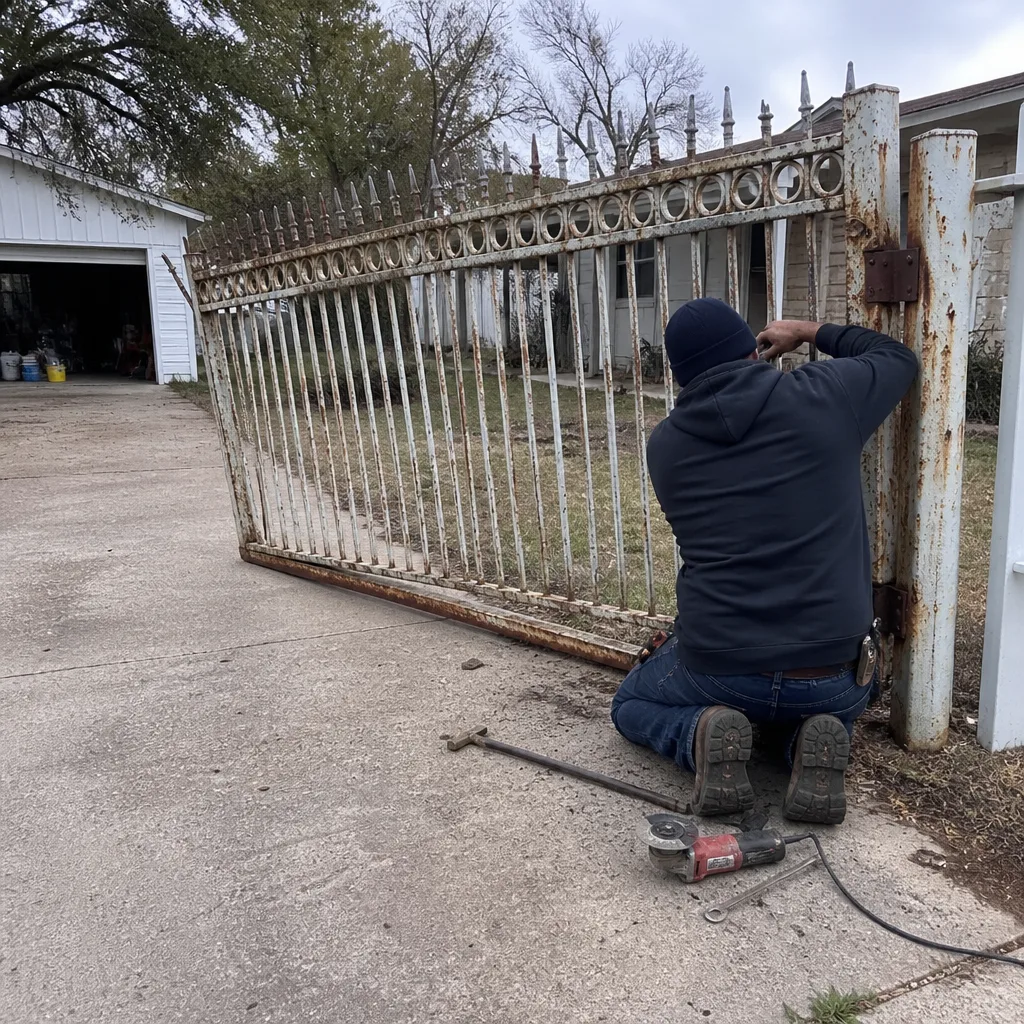 Before
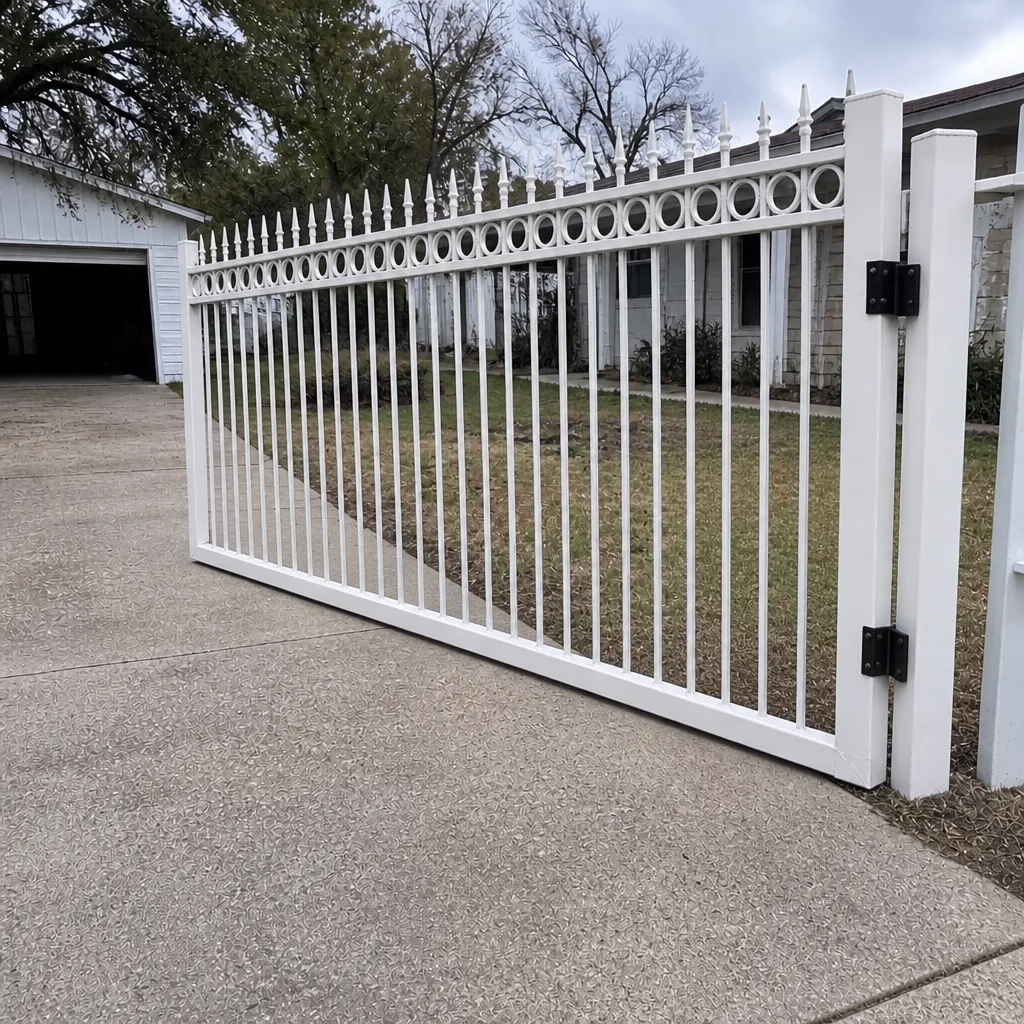 After
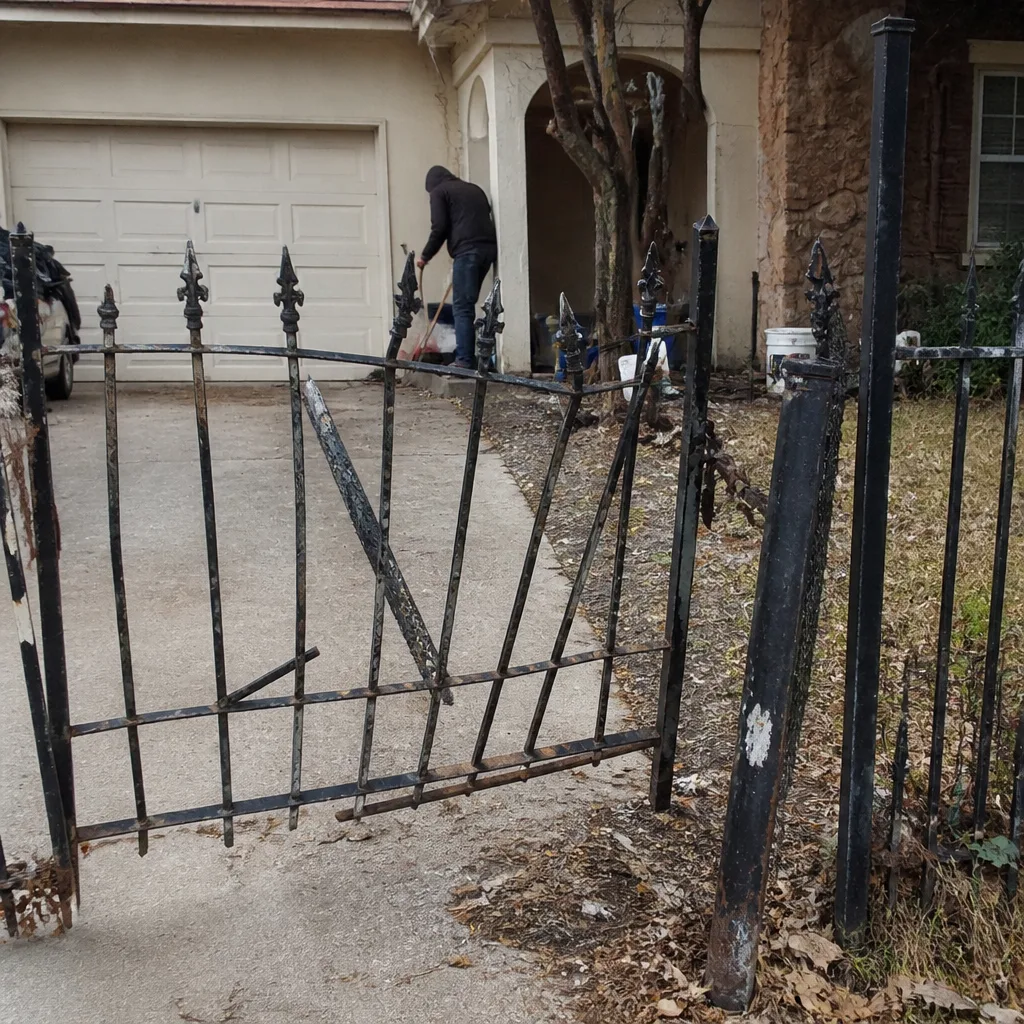 Before
 After
 Before
 After
Common Mistakes to Avoid
- Replacing the operator before testing power and signal. A new operator wired to a bad supply or a stuck loop will behave exactly like the old one. Test the inputs first.
- Forcing a binding gate by hand or with a bigger operator. A gate that drags is telling you the hardware is worn. Pushing through it strips the operator’s gearbox and can snap a hinge under load.
- Adjusting limit switches by trial and error inside the housing. Limit switches set too tight cause constant reversals and strain the operator. Set them by the manual or leave them to a technician.
- Ignoring the loop detector. Homeowners and handymen alike blame the operator for a gate that “won’t close” when the loop is holding it open. The loop is a control, not a sensor you can skip.
- Treating every brand the same. A Ghost Controls battery stall and a LiftMaster logic stop under identical conditions have different causes. Generic diagnosis replaces good parts.
- Covering up a mechanical fault with a board reset. A power-cycle that “fixes” a dragging gate is temporary; the wear is still there and will fail again, often harder.
- Letting a handyman open a live operator housing. The electrical danger is real and the safety system on your gate is what keeps a heavy panel from hitting a person or a car. This is not general handyman territory. A dedicated gate repair specialist understands the whole system, power, signal, and mechanical, as one.
When to Call a Professional
Call a professional when the reset test doesn’t clear the fault, when anything requires opening the operator housing, when a gate reverses or stalls unpredictably, when a commercial access system is involved, or when a gate has visibly sagged or come off its track. Those are the situations where a wrong move risks the board, the operator, or a person. Our technicians have up to 13 years of experience diagnosing exactly these systems, on your brand, with the right test equipment. Gate Repair Killeen offers free estimates in Killeen, and Fast dispatch from 7am to 7pm, Sunday through Friday. Call (866) 722-0161 and we’ll run the decision tree with you, or send a technician to do it on site. We answer 24/7.
Frequently Asked Questions
Run the five-second response test: if the gate doesn’t move or give any sound, the issue is usually power or signal; if it moves and then stalls, drags, or reverses, the problem is usually mechanical binding or a safety trip. Watch for any click from the operator, try the wall control instead of the remote, and look for wobble on the track or hinges as the gate moves. If it moves but struggles, suspect mechanical; if it’s dead silent, suspect power or signal. Call (866) 722-0161 for a free estimate if the test isn’t conclusive.
Many gate issues can be handled the same day, and our fast dispatch runs from 7am to 7pm, Sunday through Friday. Whether yours qualifies depends on the part needed and the diagnosis: a loop adjustment, hinge repair, or reset is often same-day, while board or operator replacement may need a return visit once the right part is in hand. Call (866) 722-0161 and we’ll tell you what’s realistic for your symptom. We answer 24/7.
A gate that starts and then reverses mid-cycle is almost always reacting to its safety system: a misaligned or dirty photo-eye, a driveway loop detector sensing a phantom vehicle, a limit switch set too tight, or mechanical resistance the operator reads as an obstruction. Clean the photo-eyes and check for anything blocking the beam first, then check whether the gate binds by hand. If it reverses at the same spot every time, it’s usually a limit or a bind point. Call (866) 722-0161 for a diagnosis.
Power-cycling the operator from its breaker, re-pairing a remote, and cleaning the safety photo-eyes are safe for a homeowner. Opening the operator housing, touching the control board, or adjusting wiring with the power on is not: the operator’s wiring carries line voltage and can cause serious injury, and a heavy gate panel can crush. If a reset requires a tool inside the housing, stop and call a professional. Call (866) 722-0161 for safe, free-estimate troubleshooting.
When one input works and the other doesn’t, the problem lives in that input’s signal path, not the operator. A remote that fails while the keypad works points to a worn remote button, weak battery, or a receiver and antenna fault; the reverse points to a keypad wiring run or a dead keypad. Test each input separately and you’ll isolate the fault. Call (866) 722-0161 if you want a technician to trace it, estimates are free.
Yes, in specific and predictable ways. Daily heat cycles make metal parts expand and contract, so aluminum tracks can bind in the warm part of the day and run free in the morning, and steel hinge assemblies fatigue at the weld and pivot. Control boards and receivers in a hot, unshaded enclosure age faster, and solar-operator batteries lose capacity in the heat. Note the time of day and temperature when a fault appears, and call (866) 722-0161 to have the heat-related fault traced properly.
The Bottom Line
Almost every gate problem in Killeen comes down to power, signal, or mechanical wear, and the five-second response test tells you which in less time than it takes to find a flashlight. Read the symptom before you touch a thing: no movement means power or signal, movement-then-stall means mechanical or supply, movement-then-reverse means safety hardware. Keep your DIY to the safe resets, leave the housing closed and the wiring alone, and remember that a brand isn’t a detail. A LiftMaster stop and a Ghost Controls stall diagnosed the same way will cost you parts. Diagnose first, replace only when necessary, and call a specialist when the fault lives inside the operoper or the safety system. When in doubt, call us.
Contact Us for a Free Estimate
If your gate is doing something this guide hasn’t accounted for, or the fix lives inside the operator where a homeowner shouldn’t be, we can help. We work on your brand, not around it, and we cover repair, electric system service, and new installation under one gates-only specialist. Call (866) 722-0161 for a free estimate. We answer 24/7, and fast dispatch from 7am to 7pm, Sunday through Friday, means a technician can be on the problem quickly. Also reach our electric gate repair team for control board, operator, loop, and receiver work, and the rest of our Gate Repair Killeen team for anything else on your gate.
Written by the team at Gate Repair Killeen.