
Last updated November 15, 2026
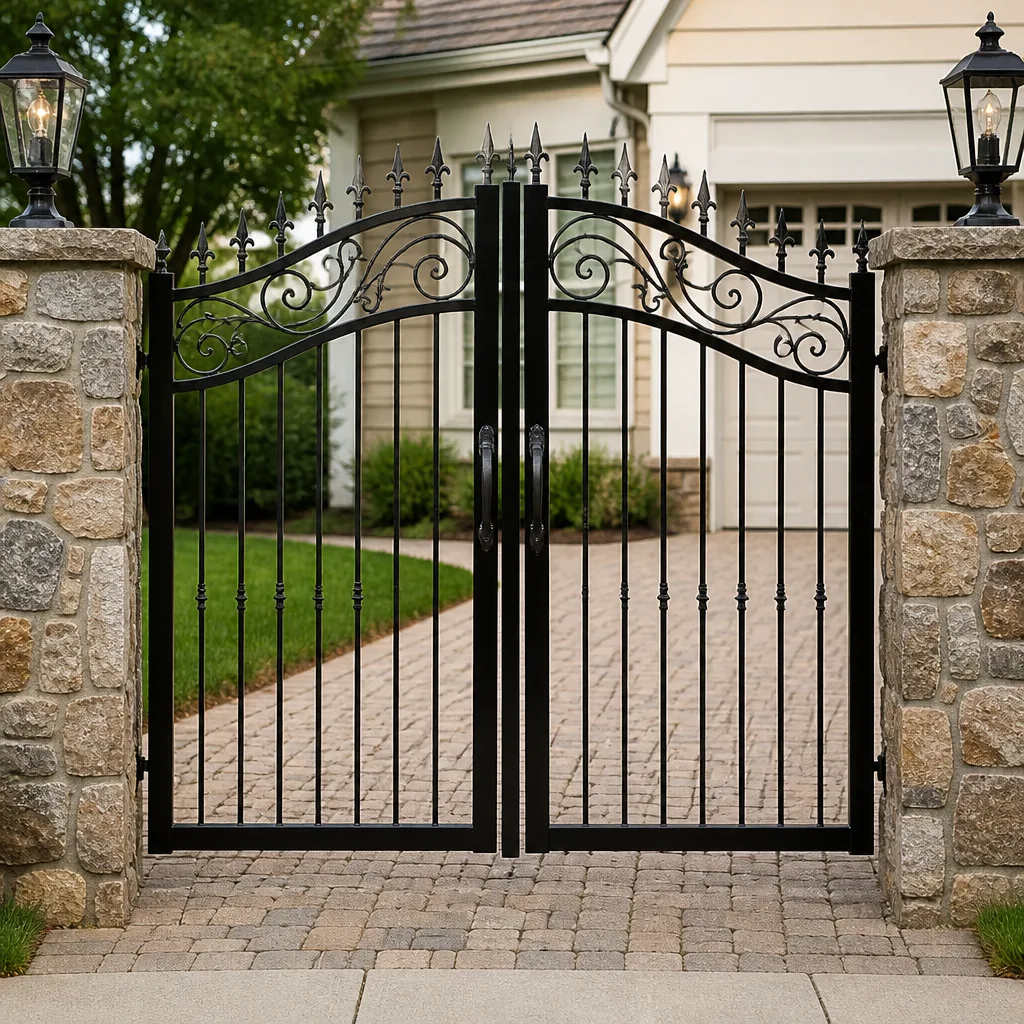 Wrought iron
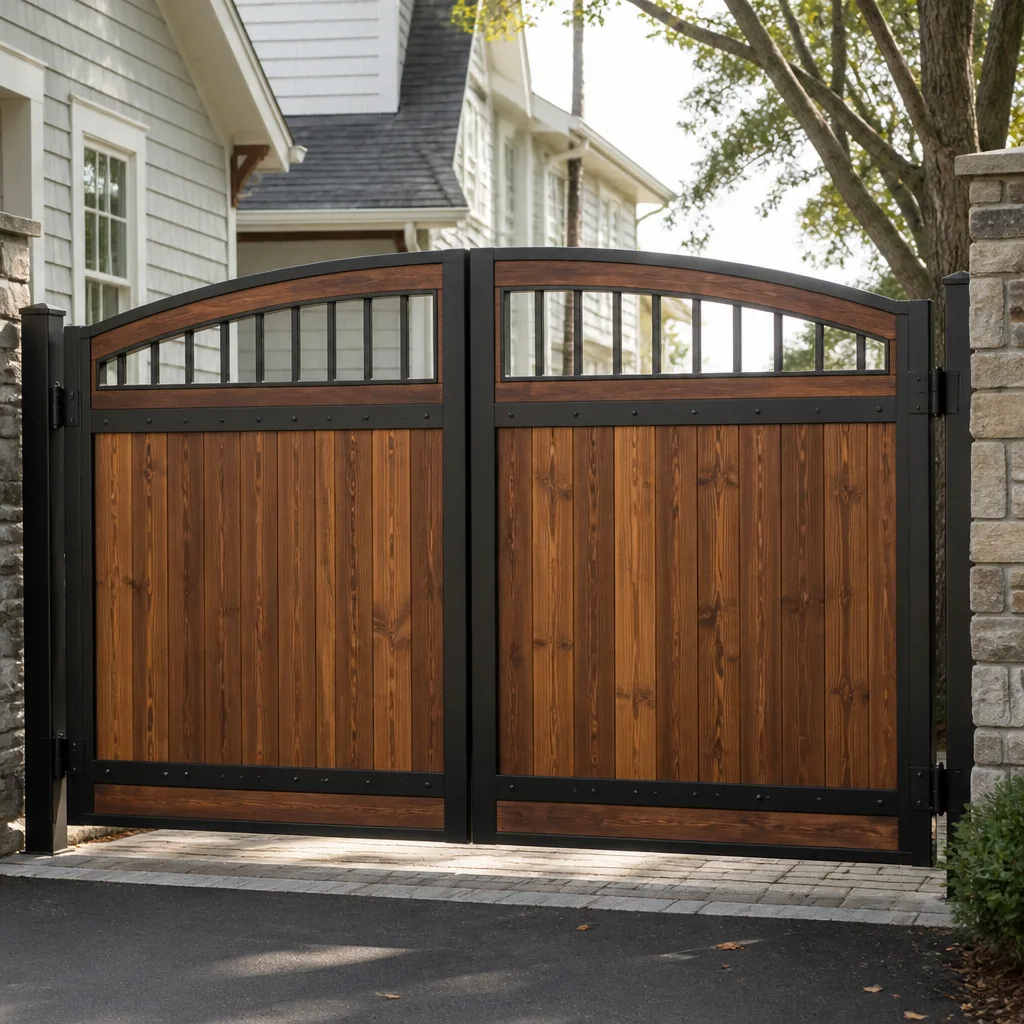 Wood & steel frame
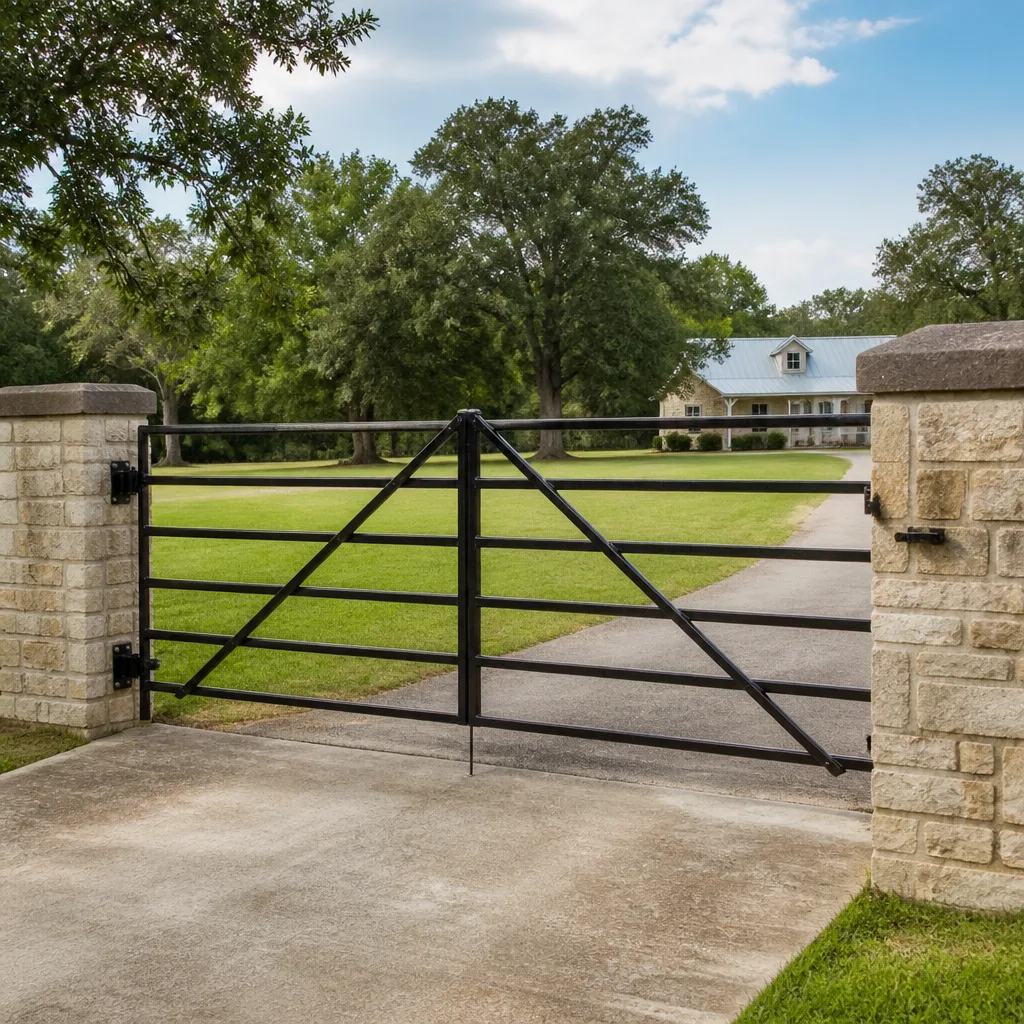 Farm & ranch
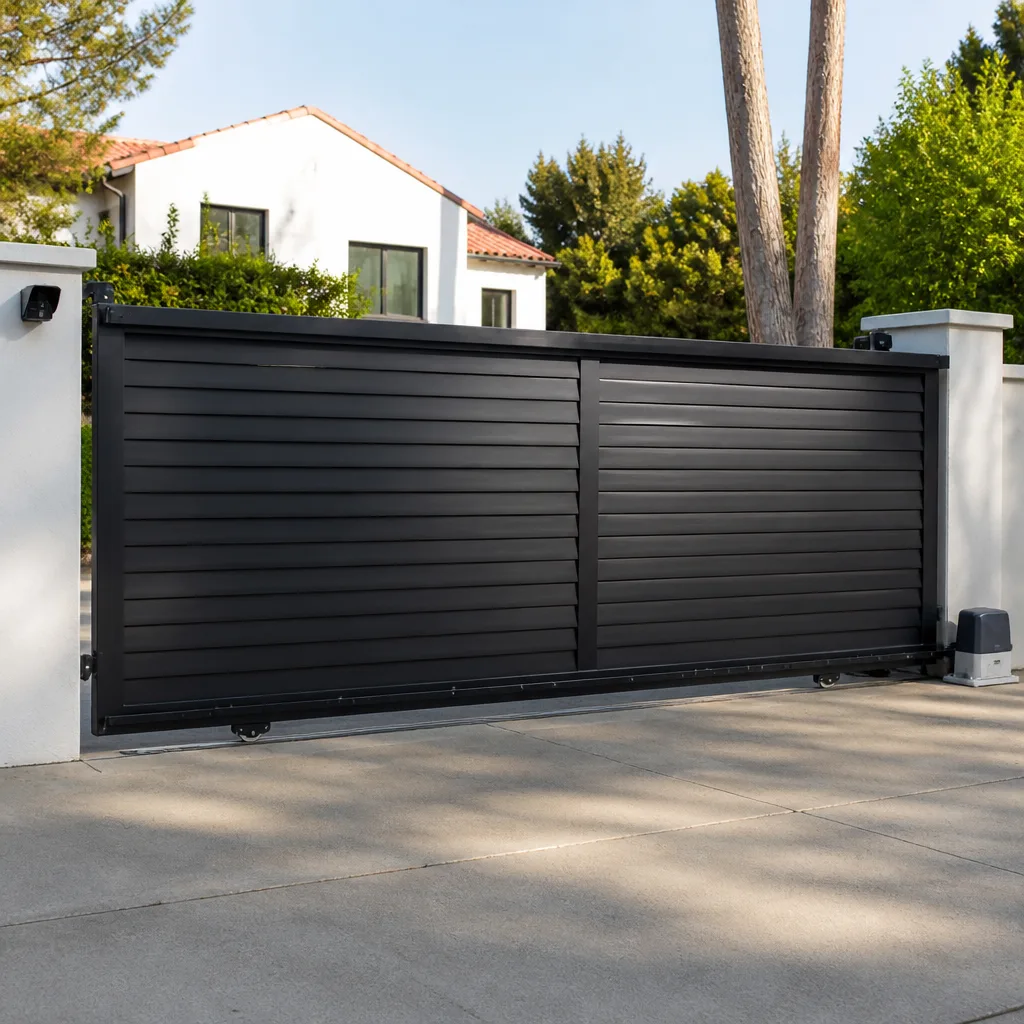 Sliding driveway gates
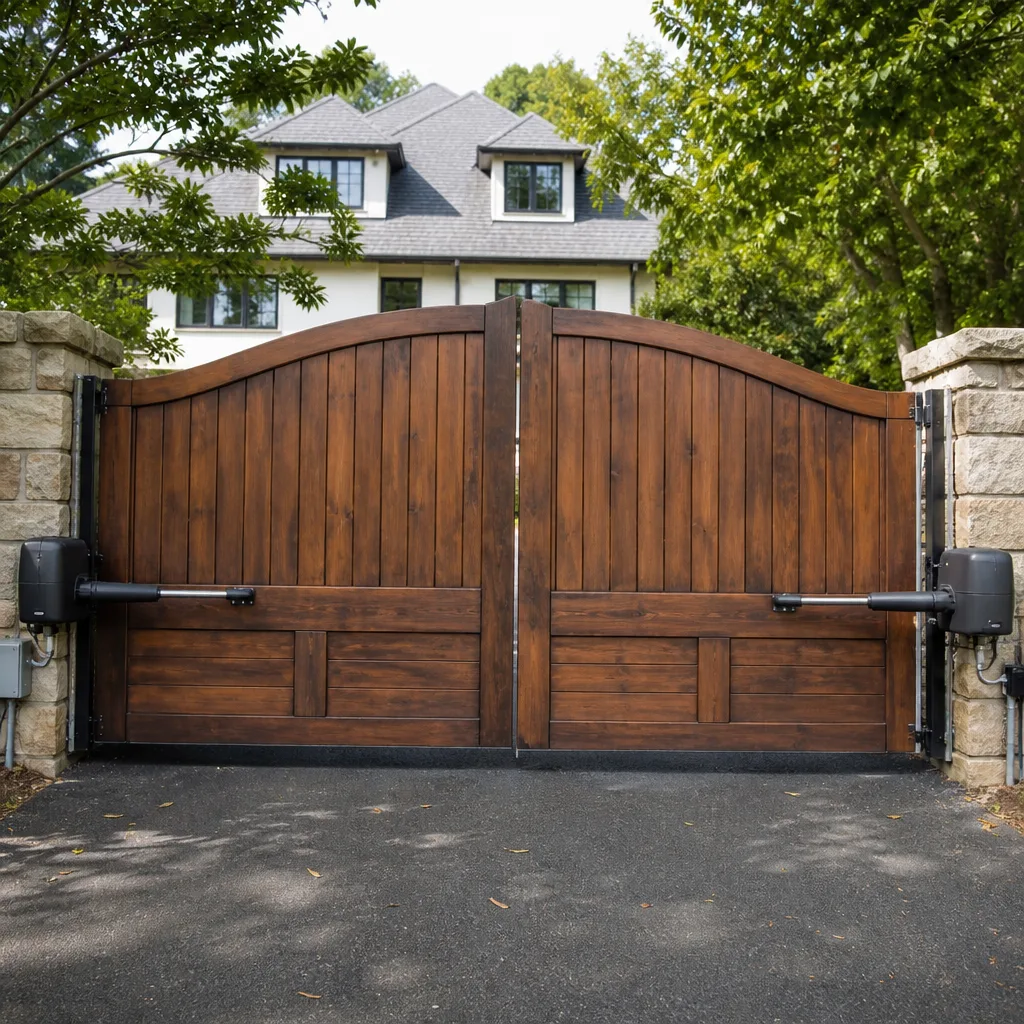 LiftMaster operators
Free on-site gate assessment - hinges, posts, and your LiftMaster or Nice gate operator checked before anything is quoted
The assessment is free and the quote is the invoice.
Get your free estimateChoosing the Right Gate Repair Brand: A Buyer’s Guide for Killeen
A residential-rated LiftMaster operator mounted on a commercial entry gate that cycles 80 times a day isn’t a budget win. It’s a warranty void and a failure on a 14-month timeline. That’s the misconception we run into most in Killeen: homeowners and property managers assume brand choice is about reputation, or about which name they recognize from a garage door, when it’s actually about three unglamorous filters. Duty cycle. Application type. Parts availability. Get those three right and price becomes a tiebreaker. Get them wrong and the cheapest operator is the most expensive thing you’ll ever bolt to a post. This guide walks through how to run those filters yourself, how to read a brand recommendation from any contractor, and why the answer looks different for a half-acre lot in Killeen than it does for a multi-tenant entry.
Quick Answer
The right gate operator brand in Killeen is the one rated for your gate’s actual daily cycle count, built for your specific application (slide or swing, single or dual leaf, gate weight and arm length), and backed by parts that can reach you in days rather than weeks. Brand reputation matters far less than those three fits. A brand-familiar technician can service almost any of them, but no technician can make an under-spec operator survive a duty cycle it was never built for.
Styles & brands we work with
- Wrought iron
- Wood & steel frame
- Farm & ranch
- Sliding driveway gates
- LiftMaster operators
Table of Contents
- Why Duty Cycle Comes Before Brand
- Matching the Brand to Your Gate: Slide, Swing, Weight, and Arm Length
- Parts Availability in Killeen: Which Brands Get You Back in Service Soonest
- The Real Five-Year Cost of a Gate Operator Brand
- How to Evaluate a Brand Recommendation From a Contractor
- You Probably Don’t Need to Change Brands
- Commercial Access Control: When the Brand Question Gets Bigger
- Common Mistakes to Avoid
- When to Call a Professional
Why Duty Cycle Comes Before Brand
Duty cycle is the number of operating cycles an operator is engineered to handle per day or per hour, and it is the single spec that eliminates more brands than any other. Not the badge on the housing. Not the price tag. Most residential operators are built around a light daily cycle count: a driveway gate that opens for the school run, the groceries, and the evening arrival. A small commercial entry with a keypad and a steady stream of visitors runs a very different load. Put a residential unit on commercial traffic and it works beautifully for a while, then it doesn’t.
Here’s how to calculate your gate’s actual daily cycles before you look at a single brand:
- Count every vehicle passage in one direction over a typical busy day. Each open is one cycle, whether or not the gate was already open.
- Add pedestrian and keypad entries, delivery access, and any shared code use.
- Multiply by the busiest season for your property. For a shared drive in Killeen, that means the week school traffic peaks, not a quiet week.
- Add your own overrides: manual opens from the app or a transmitter, loop triggers from vehicles that turn around, and late arrivals.
- Compare that figure against the published duty rating of the operator you’re considering, not the marketing copy.
Two Killeen realities push cycle counts higher than owners expect. First, the summer heat here is hard on operators, since a control board and a motor working in a hot enclosure derate faster than the spec sheet assumes. Second, a gate that faces the prevailing wind on an open lot works harder on every cycle. Both are reasons to buy duty capacity headroom rather than exactly matching your count.
What We Mean by “Rated Honestly”
Every brand markets its residential line with an implied use case, and some stretch the language further than the hardware supports. A slide operator sold for a light-commercial entry and a slide operator genuinely built for one can look identical in a catalog. The difference shows up in the operator’s rated cycles and in how heavy the components are. When a brand’s published rating is vague, that’s information. A specialist who works the brands daily can usually tell you where a given unit lands in practice, and a generalist often can’t.
Matching the Brand to Your Gate: Slide, Swing, Weight, and Arm Length
Before a brand recommendation means anything, the application has to be nailed down, because most brands don’t cover every gate type. Application fit is a set of physical facts about your gate, and those facts narrow the field fast. In our experience, more brand mismatches trace back to a skipped measurement than to any defect in the operator itself.
The specs that determine which brands are even eligible:
- Gate type. Slide gates, swing gates, and barrier arms each belong to different operator families. A brand strong in slide operators may have nothing suitable for a dual-leaf swing drive.
- Leaf count and weight. A single leaf and a dual leaf need different hardware. So does a 400-pound ornamental aluminum gate versus a heavily built steel driveway gate. Exceeding the rated leaf weight cooks a motor, and no brand tolerates it.
- Arm length and geometry. Swing operators depend on the relationship between the pivot, the mounting point, and the arm. Get the geometry wrong and the gate opens at an angle, strains the operator, and wears the hinges.
- Travel and clearance. Slide gates need room to roll clear of the opening and a track or cantilever that supports the gate’s weight through the whole run.
- Power and access hardware. Whether the operator needs a receiver, a keypad, an intercom, or safety loops shapes which brands’ ecosystems fit cleanly together.
- Measure the gate leaf and note its weight, or the manufacturer’s weight if you know it.
- Photograph the hinge side, the post, the ground track or cantilever, and the control enclosure.
- Note the gate type and the direction of travel.
- Write down the current operator brand and model if one is installed.
- Hand those four things to whoever is quoting. That’s the difference between a real recommendation and a guess.
If you’re starting from a broken operator and unsure what you’re working with, Gate Repair Killeen can identify it on arrival. That identification step is where a real diagnosis starts.
Parts Availability in Killeen: Which Brands Get You Back in Service Soonest
Parts availability is the filter most buyers never think about until a control board fails and the gate sits open for a week. A gate that’s stuck open on a Killeen driveway isn’t a scheduling inconvenience. It’s an access event, and commercial property managers feel it at their tenant relations level. So brand choice should factor in how quickly a replacement operator, receiver, or safety loop sensor can actually land in your hands.
The brands we work with sit across that spectrum. Some have broad distribution across Texas, so a common part is often a short trip away. Others are shipped from farther out, which is fine until you’re midway through a failure and the gate is the thing standing between you and a working driveway. The practical advice for a Killeen buyer:
- Ask where the part ships from before you commit to a brand. A specialist will know the answer or can find it quickly.
- Prefer the brand your technician can already service. Parts that are easy to get but unfamiliar to work on still cost you downtime.
- Weigh a regional distributor relationship against a flashy catalog. A widely distributed brand is often the smarter pick for a repair-first property.
- On commercial access systems, plan for spares. A control board or a receiver on the shelf cuts the failure window from a week to an afternoon.
This is where brand-agnostic capability earns its keep. Because we handle repair, electric gate repair, and installation under one roof, we aren’t steering you toward the brand with the best margin. We’re steering you toward the brand you can live with after the job.
Why Ghost Controls and Mighty Mule Come Up So Often Here
Two names we see constantly on residential Killeen driveways are Ghost Controls and Mighty Mule, and both show up for very practical reasons. Households choose them and property managers inherit them, and the repair conversation is about making what’s there work rather than replacing it wholesale. Both are perfectly serviceable systems. What they need is a technician who knows their control logic and where to get the pieces.
The Real Five-Year Cost of a Gate Operator Brand
The cheapest operator on the shelf is frequently the most expensive one over five years, and the reason is almost never the purchase price. It’s the cost of the parts it eats, the labor to keep replacing them, and the availability of a technician willing to work on it at all. We look at brand cost of ownership in three columns, and price is only the first.
- Initial cost. The operator and installation. Easily the smallest line of the three over a multi-year horizon.
- Parts cost. Control boards, receivers, loops, and limit switches vary widely by brand. A cheap operator with an expensive, hard-to-source board has a bill waiting for you.
- Technician availability. The quiet one. If a brand is common and well understood, finding someone to work on it is easy. If it’s unusual, you may be paying travel time and waiting days.
An under-spec operator compounds all three. It fails sooner, so it eats parts sooner, and it drags its owner into repairs more often. The fix isn’t a bigger brand name. It’s buying duty capacity that matches the property and then choosing among the brands that clear the first two filters on parts and service. Price is genuinely a tiebreaker at that point, not the deciding factor. A brand-aware estimate prices the job from that full picture rather than from the sticker.
If your current gate is limping and you’re weighing repair against replacement, gate repair work is usually the cheaper first move. Diagnose first, replace only when necessary.
How to Evaluate a Brand Recommendation From a Contractor
A specialist recommends based on application fit. A generalist recommends whatever they stock or whatever they can get fastest, and that difference shows up in the questions they ask you. If a technician quotes a brand before asking about your gate’s weight, type, cycle count, and power access, the recommendation is a guess dressed up as expertise. That’s the clearest signal you’ll get.
Use this checklist when a contractor names a brand:
- Did they ask what kind of gate you have before naming an operator? If not, ask them to.
- Did they ask about daily traffic, or did they just size by gate width?
- Can they tell you where the parts for that brand ship from and roughly how long a common replacement takes to arrive?
- Did they identify your existing operator and explain why they’re proposing the replacement brand, rather than defaulting to it?
- Are they willing to repair your current setup, or is replacement the only path offered?
- Do they name more than one option and explain the trade-offs between them?
In our experience, the contractor who asks about your cycle count before saying the word “brand” is the one worth listening to. The one who names a brand in the first sentence is usually solving their inventory problem, not your gate problem.
What “Factory-Familiar” Actually Means
It means the technician has worked the brand repeatedly and knows its failure patterns, its control logic, and its quirks. We’re factory-familiar with nine major systems: LiftMaster, FAAC, BFT, Linear, Viking, Ghost Controls, DoorKing, Elite, and Mighty Mule. That range matters because it lets us work on your brand rather than around it. When a caller describes an operator they can’t identify, that familiarity is what lets us diagnose instead of guessing.
You Probably Don’t Need to Change Brands
One of the most expensive mistakes in the gate world is assuming a failed operator means a brand problem. Usually it doesn’t. It means a failed control board, a stuck receiver, an aged motor, or a safety loop that’s reading the wrong thing. Replacing the brand to solve a component failure is a costly way to learn that the hardware itself was fine.
The repair-forward approach is straightforward:
- Identify the operator first. Brand and model, written down.
- Test the components. Control board, receiver, safety loops, limits, power run.
- Replace what failed, not what didn’t. A board swap is far cheaper than a new operator and a new install.
- Only consider a brand change when the operator is genuinely under-spec for the job or the brand itself has become unsupported.
This is where brand-agnostic capability matters most. We can service whatever system you already own rather than requiring a brand replacement to get you back in business. If a Killeen property has a working operator with a dead component, the honest answer is usually a repair.
Commercial Access Control: When the Brand Question Gets Bigger
Commercial gate systems raise the stakes on every filter, because the brand has to work with a wider ecosystem: keypads, intercoms, loop detectors, access credentials, and whatever else the property manager needs tied together. DoorKing is a frequent sight on the commercial side here, and that’s a brand question with a lot more attached than a residential driveway. The operator has to match the access hardware, not the other way around.
For commercial properties in Killeen, we’d stress two points beyond duty cycle:
- Integration comes before reputation. A brand that plays nicely with the access control you already have beats a brand with a better name.
- Spares are a budget line. A single property manager keeping a control board and a receiver on site can turn a multi-day failure into a same-day fix. That’s a brand decision, and a parts decision.
Commercial access work also carries more safety weight, which we’ll get to in the section below. Slide gates that come off the track and heavy panels that can crush are real concerns, and the brand you pick needs to be matched by a technician who takes those seriously.
Common Mistakes to Avoid
- Buying on brand name alone. A respected name doesn’t mean the model is built for your gate. Match the spec first, then choose among brands.
- Skipping the cycle count. If you never calculated your actual daily cycles, you’re guessing at duty rating. Run the count.
- Under-spec’ing for Killeen heat. A hot summer is hard on operators. Buy duty headroom rather than exactly matching your count.
- Ignoring parts availability. A brand whose common replacement parts ship from far away will cost you a long downtime when the board fails. Ask where parts ship from.
- Letting a generalist recommend a brand they stock. If they name an operator before they know your gate type and weight, the recommendation is convenience, not fit.
- Replacing a whole system for one failed component. A dead receiver or control board is not a brand problem. Diagnose first.
- Forgetting the safety edge on a commercial entry. Any safety system on a heavy gate has to be wired, tested, and maintained. That’s not a detail to skip for a cheaper install.
When to Call a Professional
Some brand and operator questions are answerable from a spec sheet. Others aren’t. Call a professional if your gate has stopped mid-travel, if it’s opening in the wrong direction, if the operator keeps tripping a breaker, if a safety loop is failing to detect traffic, or if you’re considering a new install and want a real recommendation rather than a catalog guess. Call especially if you don’t know what brand and model you have, since identification is the first step in any accurate diagnosis. We also recommend it if you’re looking at a heavy gate with a wiring or operator question, because the wrong move on that hardware is a genuine hazard.
Gate Repair Killeen offers free estimates in Killeen, so call (866) 722-0161. We answer 24/7. Our technicians have up to 13 years of experience across residential driveway gates and commercial access systems. Fast dispatch from 7am to 7pm, Sunday through Friday.
See the difference
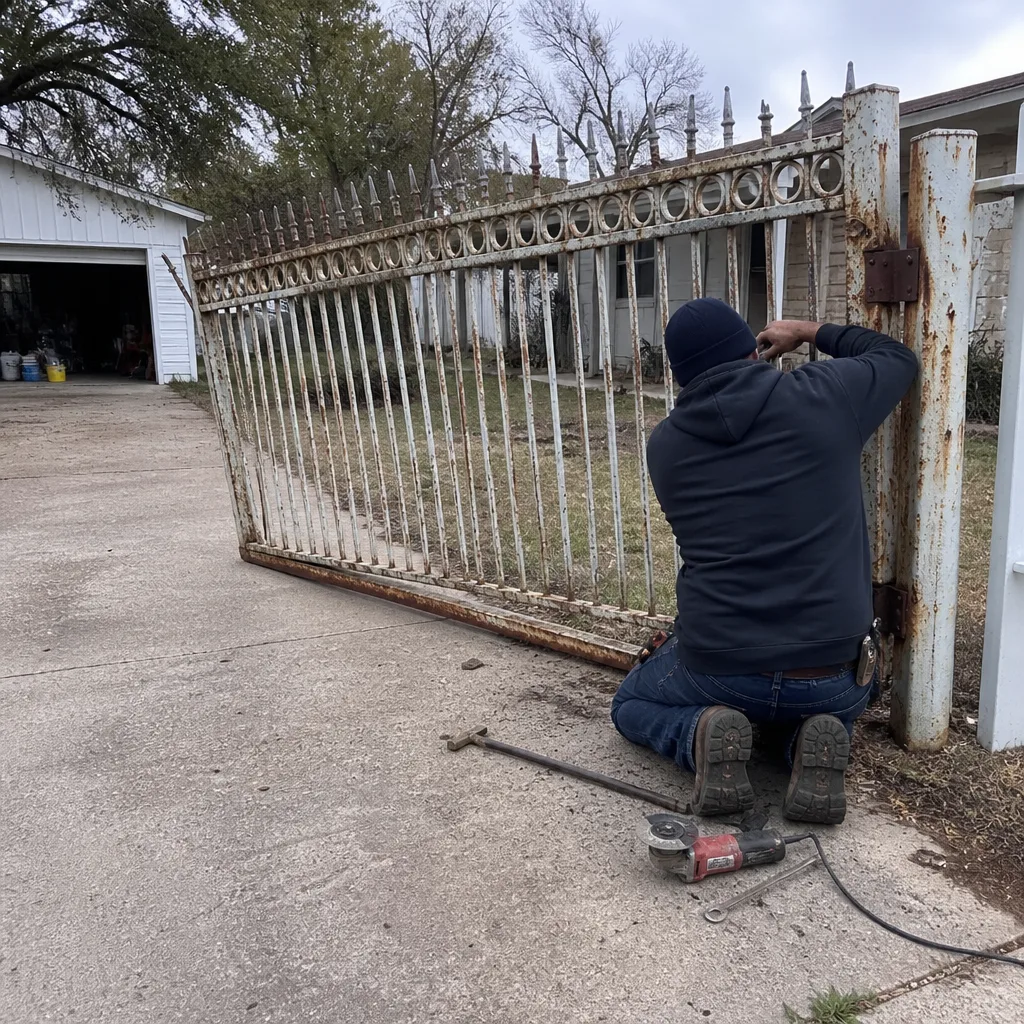 Before
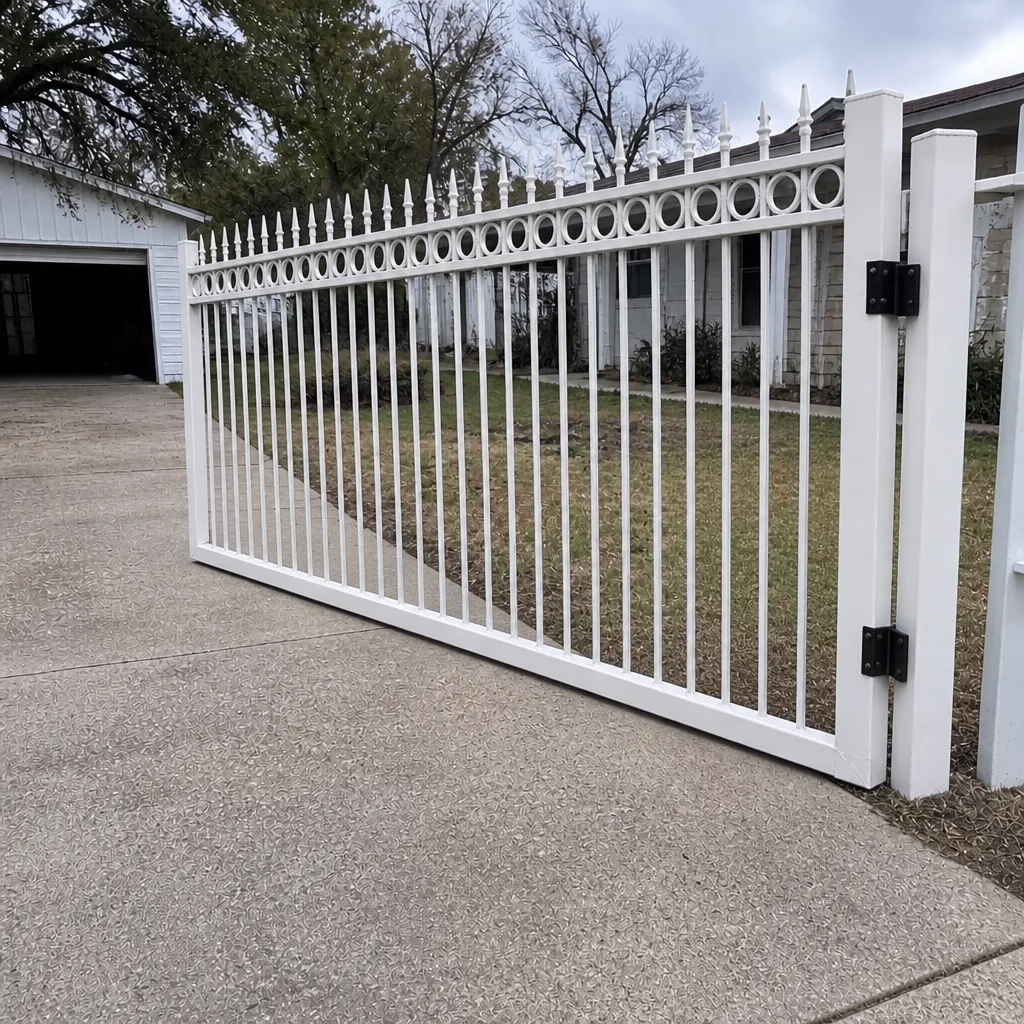 After
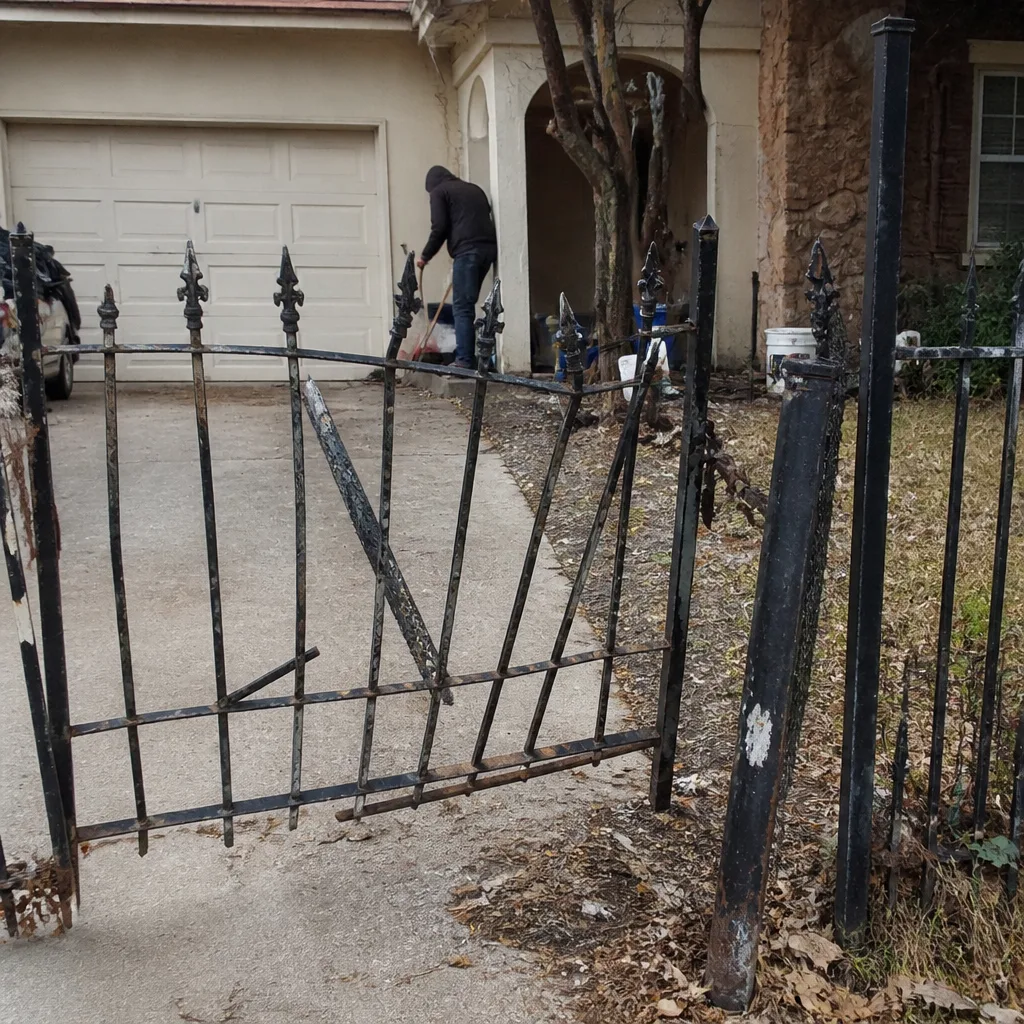 Before
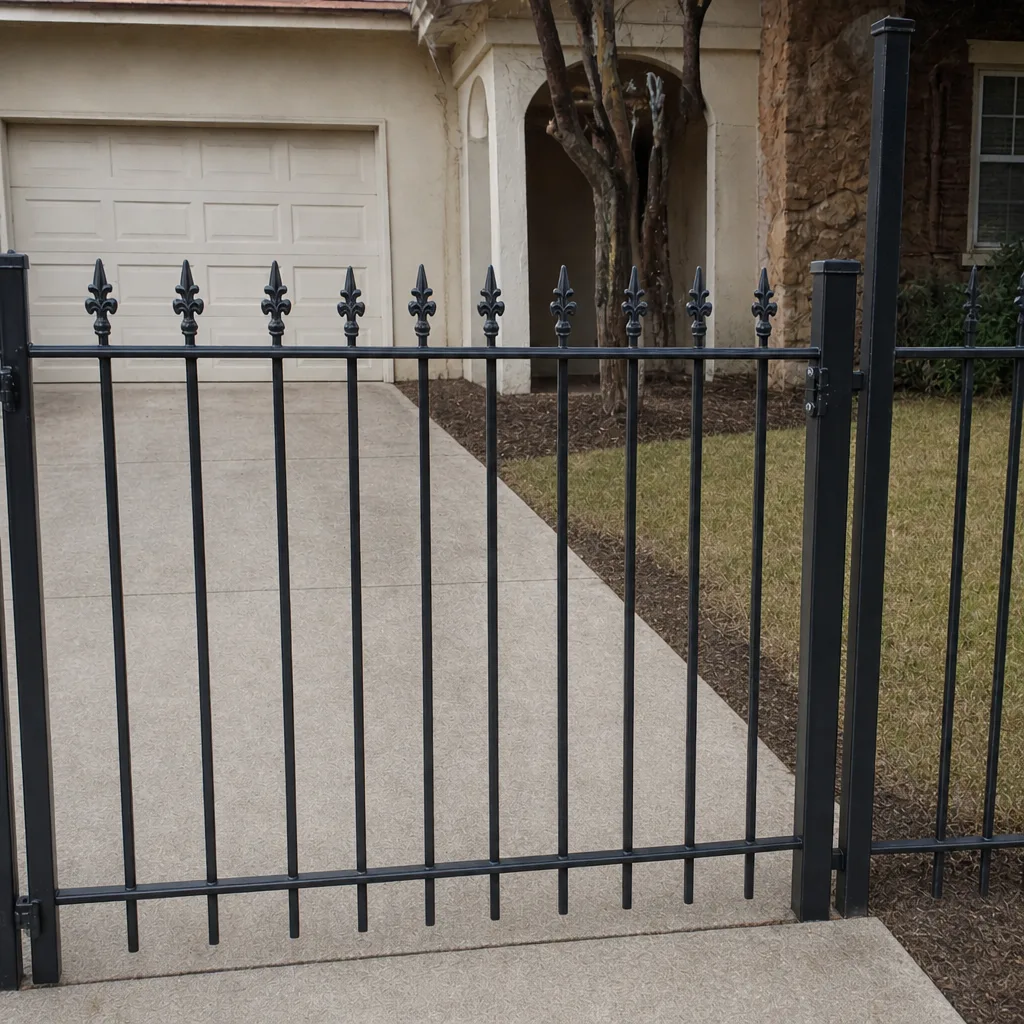 After
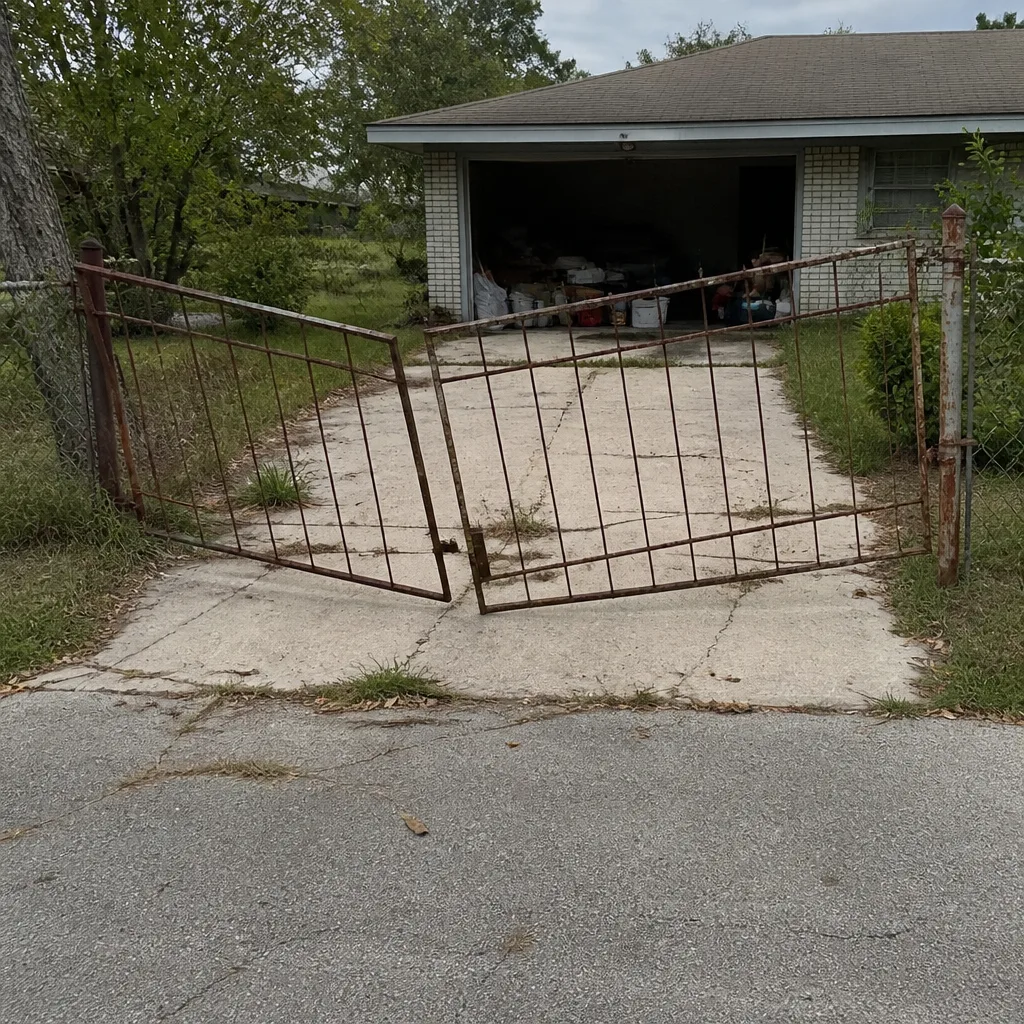 Before
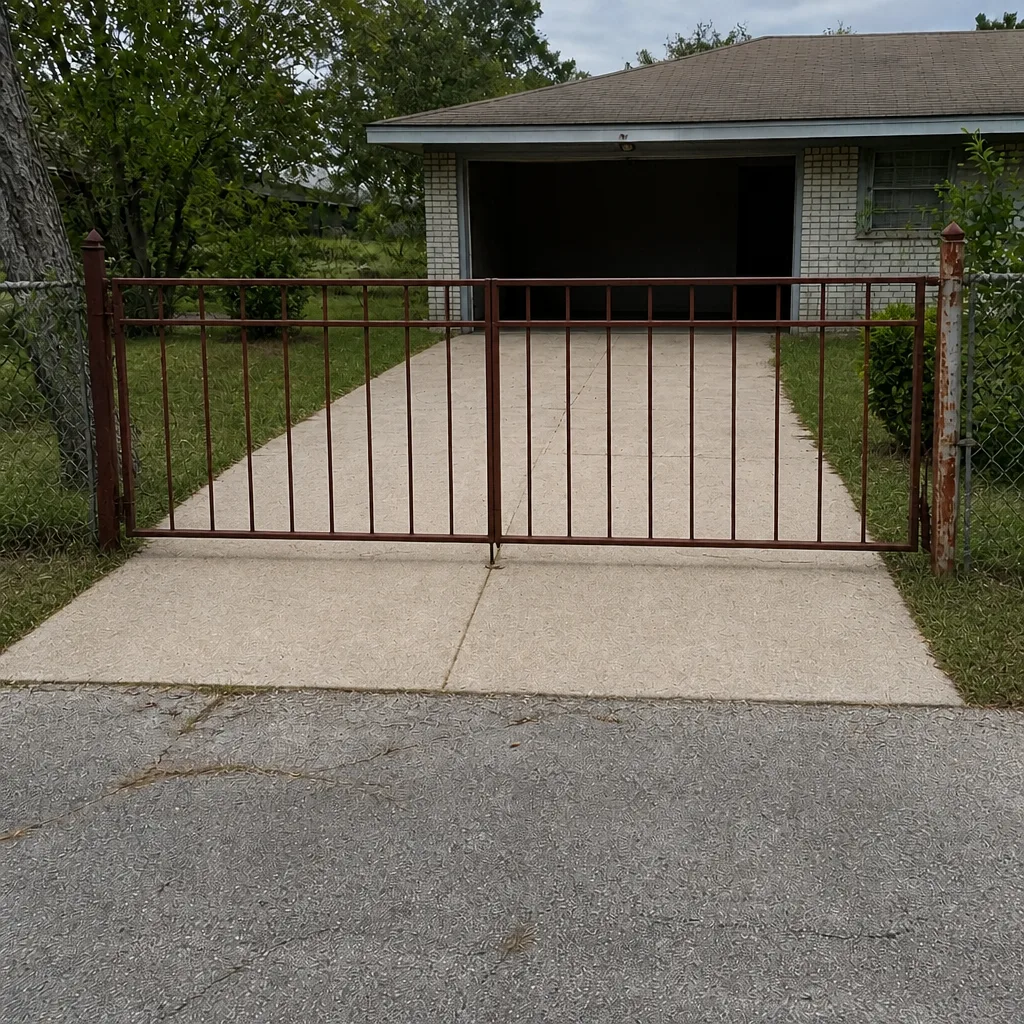 After
Frequently Asked Questions
The best brand in Killeen is the one that matches your gate’s daily cycle count, your application type, and local parts availability, not the most famous name on the catalog. Those three filters cut the list down fast. If a technician recommends a brand before checking your gate’s weight, type, and traffic, ask them to run the checks first. Call (866) 722-0161 for an exact recommendation based on your actual gate.
Count every vehicle passage over a typical busy day, add pedestrian and keypad entries, multiply by your busiest season, and add your own overrides. That figure is your real load. Then compare it against the operator’s published rating, not the marketing description. For most residential properties the count is lower than owners fear and higher than they assume on commercial entries.
Usually no. A failed receiver, control board, or safety loop is a component failure, not a brand failure. Diagnose first, then replace only what actually failed. A brand change makes sense when the operator is genuinely under-spec for the job or the brand has become unsupported, not because a single part failed.
We work on a wide range of systems, including LiftMaster, FAAC, BFT, Linear, Viking, Ghost Controls, DoorKing, Elite, and Mighty Mule. Brand-agnostic capability means we can service whatever system you already own. That matters when you’d rather repair what’s there than replace it. Call (866) 722-0161 to talk through your system.
It depends on the brand and the part. Some brands have broad distribution across Texas and a common part can arrive quickly. Others ship from farther out, which stretches the downtime. The smartest habit is to ask where the part ships from before you commit to a brand or a full replace. A Killeen property manager who keeps a spare controller on site is rarely caught out.
Yes, and more, because the brand has to integrate with your access hardware, keypads, intercoms, and loop detectors. DoorKing and similar commercial systems are built for that kind of integration. On heavier commercial entries, safety hardware, power routing, and the brand’s control logic all have to line up. Call (866) 722-0161 and we’ll talk through the system.
The Bottom Line
Choosing a gate operator brand in Killeen comes down to three filters in order: duty cycle, application fit, and parts availability. Get those three right and price is a tiebreaker. Get them wrong and the cheapest operator becomes the most expensive thing on the property over five years. The right move is to measure your gate, count your cycles, ask where parts ship from, and then let a specialist recommend from a field they actually know. Diagnose first, buy for the load, and replace only when the hardware truly can’t carry it.
When you’re ready for a real recommendation rather than a catalog guess, call (866) 722-0161 for a free estimate. We answer 24/7. Fast dispatch from 7am to 7pm, Sunday through Friday. We’re a gates-only specialist with a full lifecycle of service: repair, electric gate repair, and installation. That means one company, one answer, and no second contractor to source.
Written by the team at Gate Repair Killeen.