
Last updated November 15, 2026
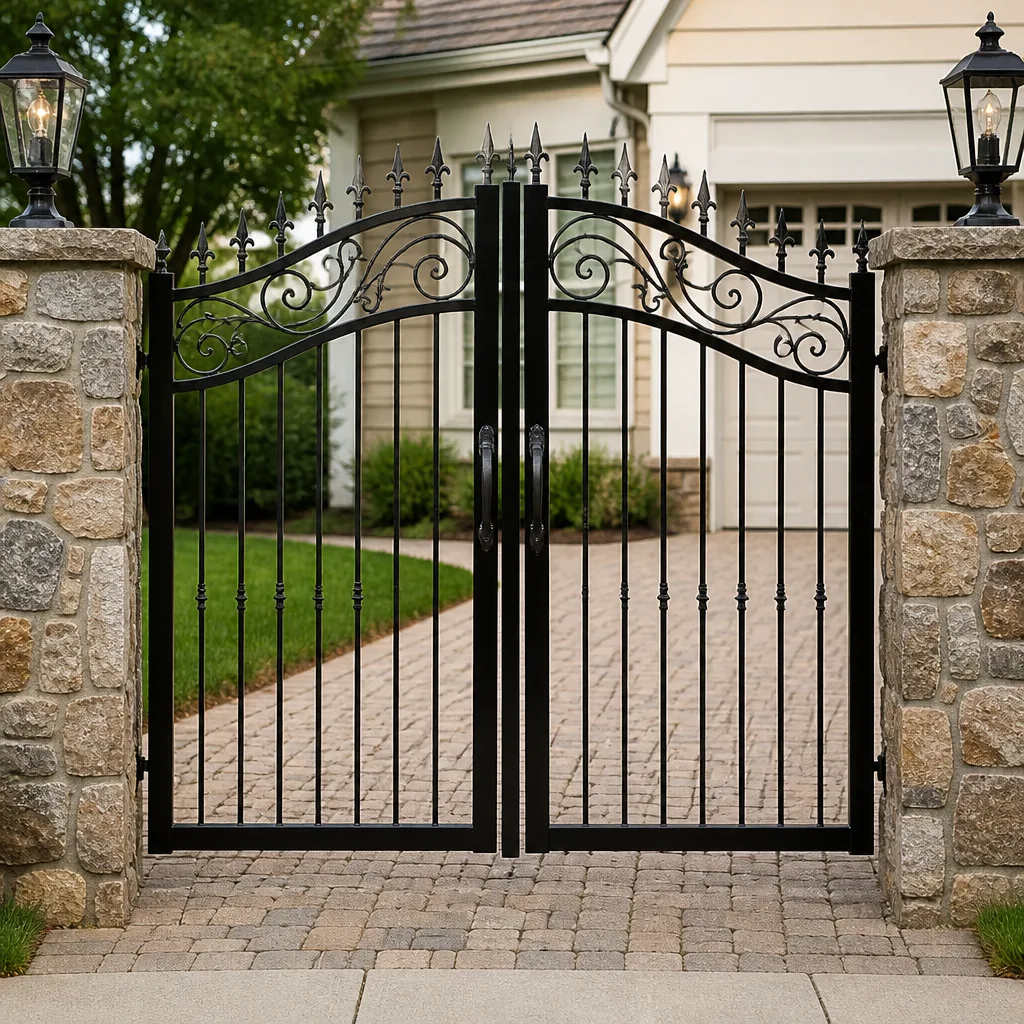 Wrought iron
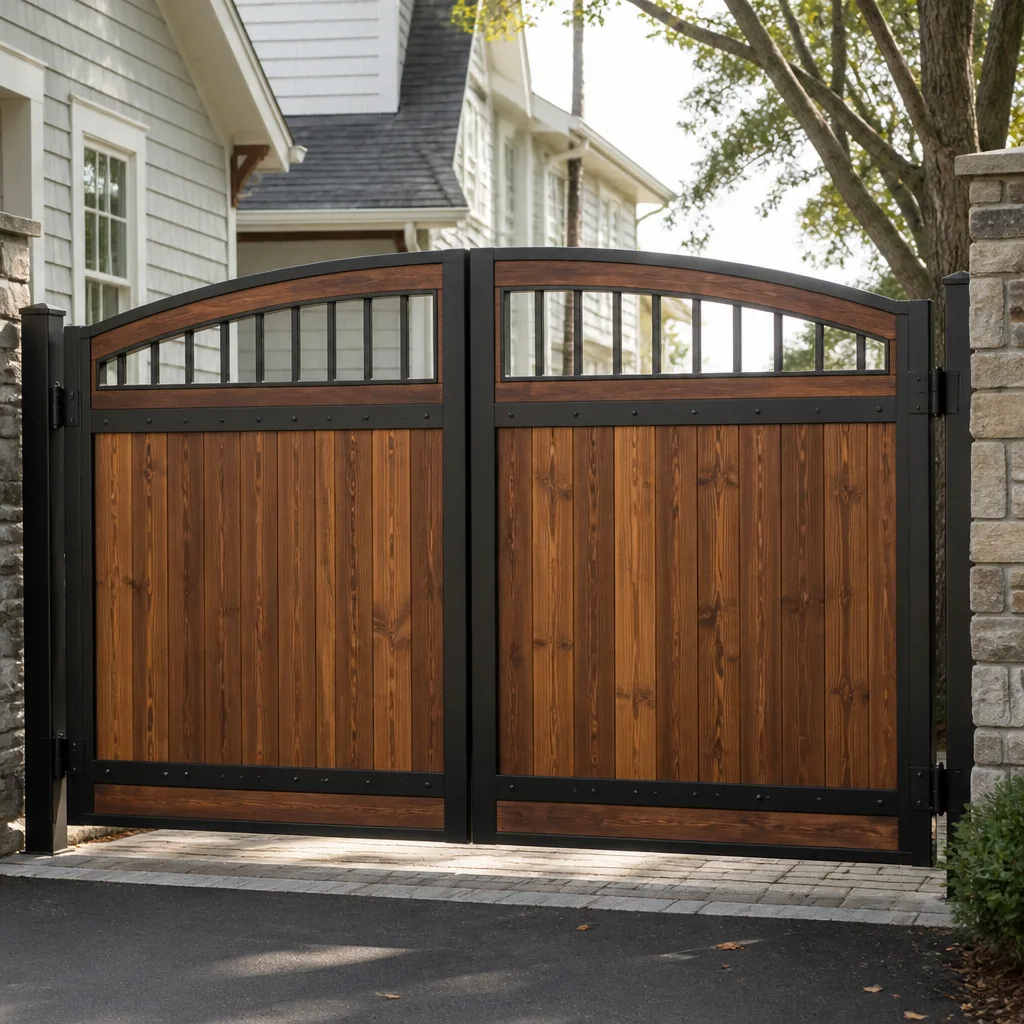 Wood & steel frame
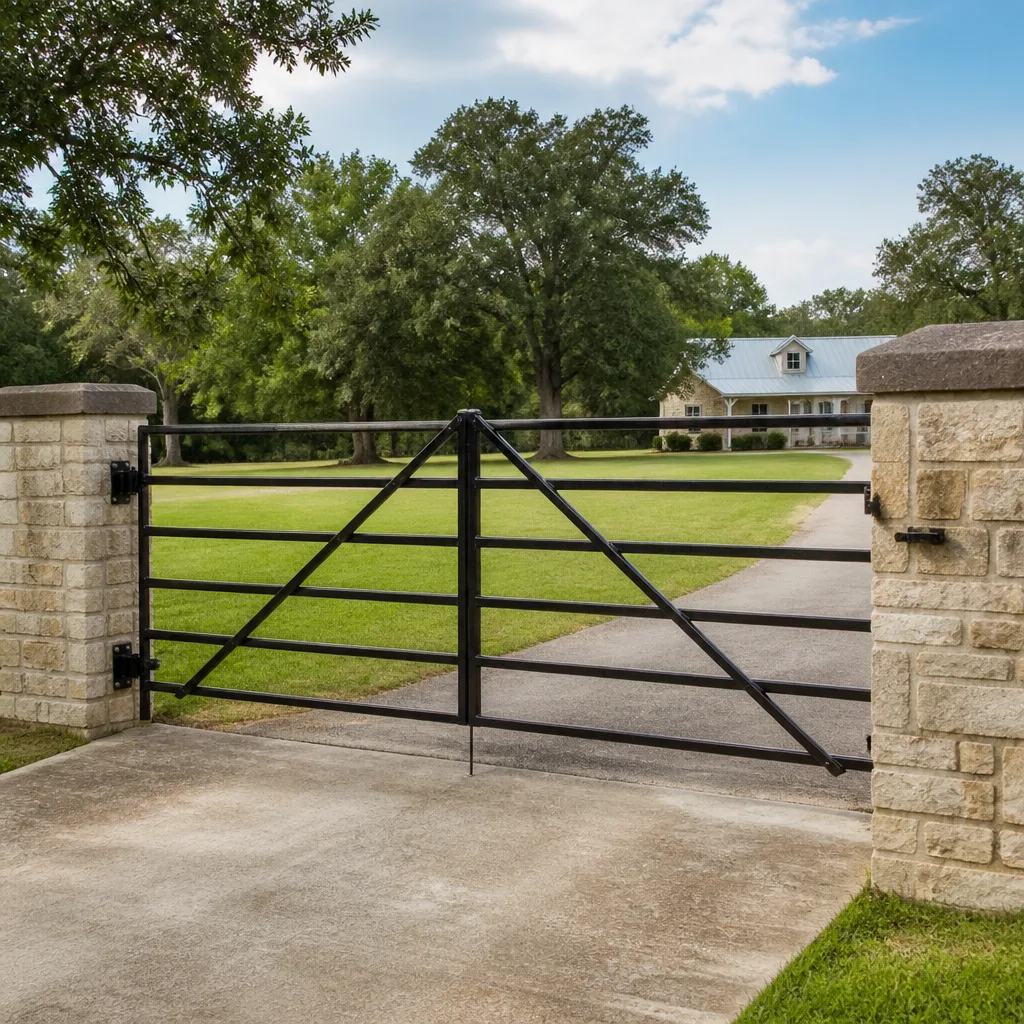 Farm & ranch
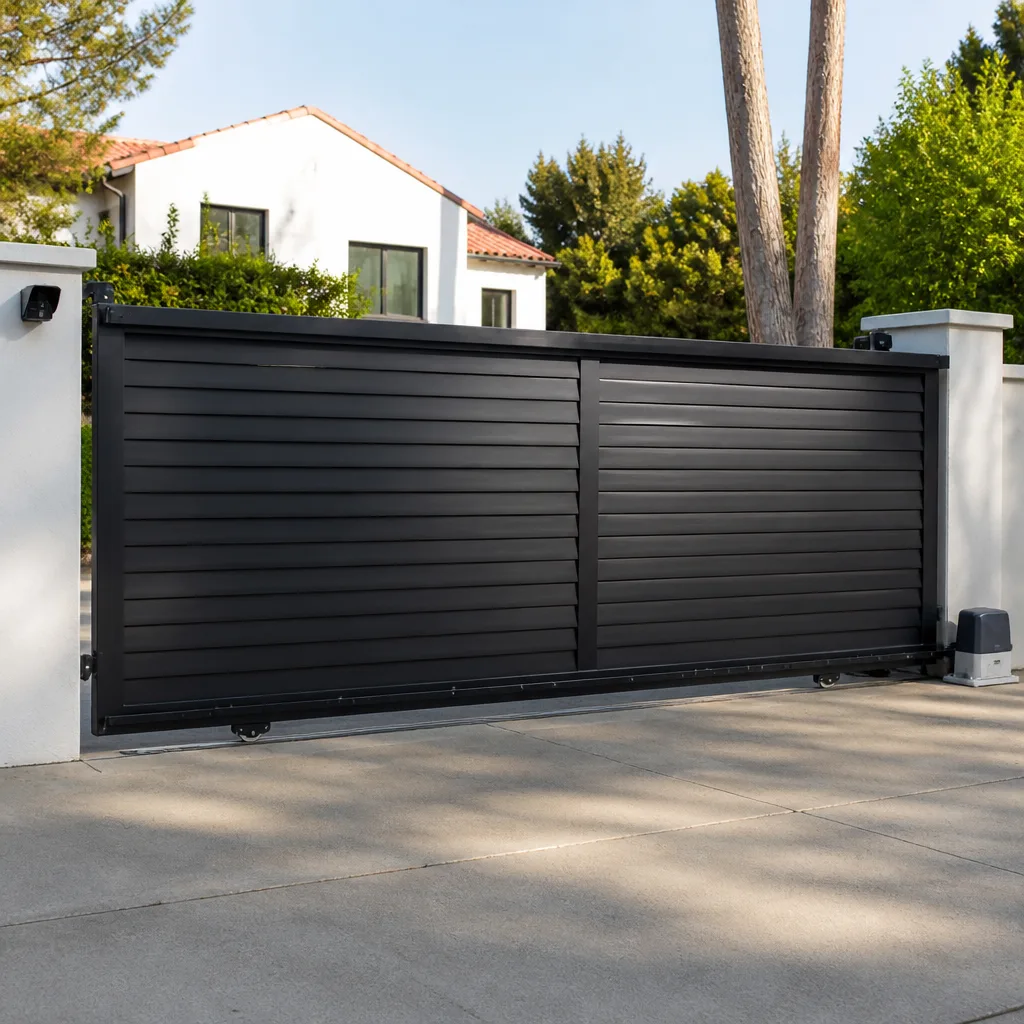 Sliding driveway gates
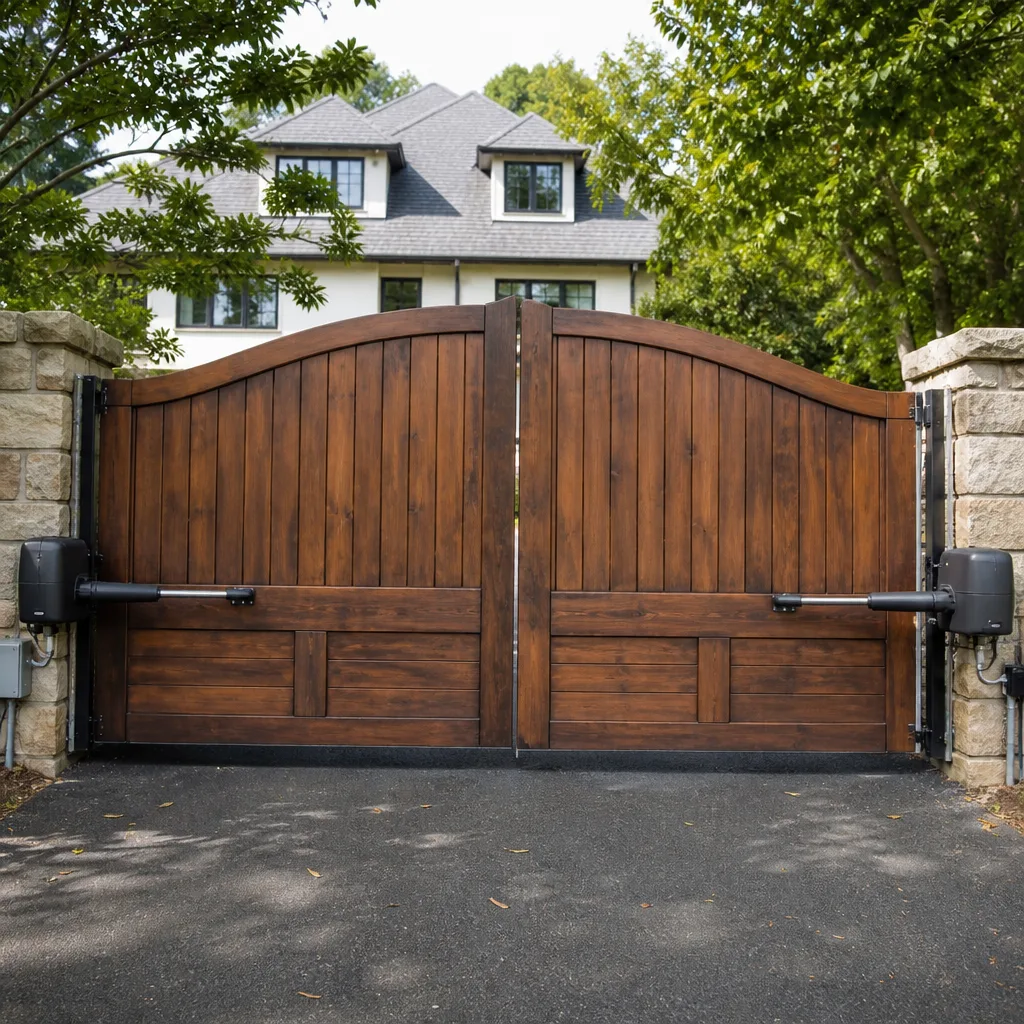 LiftMaster operators
Free on-site gate assessment - hinges, posts, and your LiftMaster or Nice gate operator checked before anything is quoted
The assessment is free and the quote is the invoice.
Get your free estimateThe Complete Guide to Gate Repair in Killeen
A gate that reverses mid-swing isn’t a motor problem most of the time. It’s usually a miscalibrated limit switch or a dirty photo eye, and replacing the motor won’t fix either one. That gap between symptom and cause is where most repair budgets go to die. Homeowners in Killeen replace an operator that was never the problem, or pay a handyman twice for a fix that didn’t hold. This guide maps gate repair by root cause instead of by symptom: mechanical wear, electrical fault, or control and logic failure. You’ll learn how to tell them apart before you call anyone, which failures Killeen’s clay soil and heat cycles accelerate, and what a real gate specialist checks that a generalist misses.
Quick Answer
Gate repair in Killeen starts with diagnosing which of three failure categories you’re dealing with: mechanical wear (hinges, rollers, tracks, sagging posts), electrical fault (power supply, wiring, operators, safety loops), or control and logic failure (limit switches, photo eyes, receivers, control boards). Most gates that open partway, reverse, or ignore the remote are the third category, not the motor. A gate-only technician diagnoses the system by brand logic first, so you’re not paying to replace parts that were never the problem.
Styles & brands we work with
- Wrought iron
- Wood & steel frame
- Farm & ranch
- Sliding driveway gates
- LiftMaster operators
Table of Contents
- The Root-Cause Framework: Mechanical, Electrical, or Control Failure
- How Killeen’s Clay Soil and Heat Cycles Speed Up Gate Failure
- Brand-Specific Repair: Why LiftMaster, FAAC, BFT and Linear Fail Differently
- What a Gate-Only Specialist Diagnoses on the First Visit
- When a Repair Is a Band-Aid on the Wrong System
- Electric Gate Repair: Operators, Control Boards, and Safety Loops
- Commercial Access Systems: What’s Different
- New Gate Installation: What a Full Install Actually Involves
The Root-Cause Framework: Mechanical, Electrical, or Control Failure
Every gate problem falls into one of three buckets. Knowing which one you’re in saves you from paying for the wrong repair, and it tells you what to expect when a technician arrives.
1. Mechanical Wear
Mechanical failures are physical. The gate sags, drags, scrapes, or won’t sit level when closed. Hinges wear, rollers flatten, tracks bend or fill with debris, and posts shift in the ground. These problems are visible and audible. A gate that grinds but still moves is usually mechanical. A gate that moves smoothly but won’t stop where it should is usually not.
2. Electrical Fault
Electrical faults mean the power path is broken somewhere between the panel and the operator. The gate doesn’t move at all, moves in one direction only, or trips a breaker. Loose connections, damaged low-voltage wire in the ground, failed transformers, and corroded terminal blocks all land here. Killeen’s summer heat stresses wiring insulation and connections, which is one reason summer electrical faults are common.
3. Control and Logic Failure
Control failures are the tricky ones. The gate has power, the mechanical parts look fine, but the behavior is wrong: it reverses mid-travel, opens halfway, ignores the remote, or runs for a few seconds and stops. Limit switches drift, photo eyes get dirty or misaligned, receivers lose their pairing, and control boards fail. This category accounts for a large share of the service calls we see, and it’s where most DIY fixes go wrong.
To narrow it down before you call anyone, walk through this checklist:
- Watch the gate through a full open and close cycle. Note exactly where it stops, reverses, or hesitates.
- Try the wall control and the remote separately. If one works and the other doesn’t, you’re likely in control or receiver territory, not mechanical.
- Look at the photo eyes. Are they lit? Are the lenses clean? A dirty or misaligned eye mimics a motor problem.
- Manually release the gate (if the operator has a manual release) and push it by hand. If it drags, you have mechanical wear underneath.
- Check the breaker and any outdoor disconnect. No power at all is electrical.
- Note the brand and model on the operator housing. This single fact speeds up diagnosis more than anything else.
If you’d rather hand the diagnosis to a specialist, gate repair starts with this exact triage. We work on your brand, not around it.
How Killeen’s Clay Soil and Heat Cycles Speed Up Gate Failure
Killeen sits on heavy clay soil, and that single fact changes how gate systems age here compared with guides written for sandy or rocky ground. Clay expands when wet and contracts when dry, and it moves gate posts with it. A post that was set perfectly plumb can shift a fraction of an inch over a season, and a fraction of an inch at the post means a gate that drags at the latch side. Homeowners often blame the operator when the real problem is a post that has moved.
Killeen’s heat cycles compound this. Long, hot summers bake the operator housing, the control board, and the wiring insulation. Thermal expansion and contraction work on every connection, every terminal, and every solder joint. Control boards fail faster in sustained heat, and low-voltage wire buried in soil that dries and cracks can get pinched or nicked.
What this means for gate owners in Killeen:
- Post movement is common. If your gate drags, have the posts and hinges checked before anyone touches the operator.
- Control board failures cluster in summer. A board that fails in July is often a heat-stress failure, not a manufacturing defect.
- Photo eyes foul quickly. Dust and pollen in the air coat the lenses. Cleaning them is the cheapest fix in the book.
- Wiring in the ground takes abuse. Clay that shrinks pulls on buried conduit and wire. Electrical faults that come and go often trace back to the run between the house and the gate.
Guides written for other regions talk about frost heave and salt corrosion. Neither applies here. What applies is clay movement and heat, and a technician who works in Killeen every week knows the difference.
Brand-Specific Repair: Why LiftMaster, FAAC, BFT and Linear Fail Differently
Operators from different manufacturers fail in different ways, and a technician who knows the brand’s logic diagnoses faster. We work on electric gate repair across nine major systems, including LiftMaster, FAAC, BFT, Linear, Viking, Ghost Controls, DoorKing, Elite, and Mighty Mule. Each has its own control architecture, its own limit-switch design, and its own quirks.
Here’s how brand logic changes the diagnosis:
- LiftMaster systems have well-documented control logic and diagnostic indicators, but the safety-reversing behavior is often tied to photo eye alignment and the board’s learned travel limits. A technician who knows the board can tell you whether the limits drifted or the board failed.
- FAAC operators are common on heavier swing gates, and encoder and limit-switch faults show up as partial travel or repeated reversal. The board’s error indicators tell a trained eye a lot before any part is touched.
- BFT systems use their own control boards and accessory wiring conventions. Generic advice about wiring a receiver or a loop often doesn’t apply, which is why generalists struggle with them.
- Linear operators are widely used residentially, and receiver pairing and limit adjustment are frequent service items. A brand-familiar technician can re-pair and re-limit without replacing hardware.
Generic advice on the internet treats every gate operator the same. They aren’t. A handyman reading a forum post about a LiftMaster board will not know what a FAAC encoder fault looks like. Diagnose first, replace only when necessary, and know the brand before you touch the board. If you’re in Killeen and want a technician who already knows your system, that’s the whole point of a gate-only specialist.
What a Gate-Only Specialist Diagnoses on the First Visit
A gate-only specialist arrives knowing what to check in what order. That’s the difference between a first-visit diagnosis and a guessing game that runs across three callbacks. Here’s what a proper first visit covers.
- Identify the operator and board. Brand, model, and control board revision get recorded first. Every diagnosis after this is anchored to the actual system.
- Cycle the gate and observe. Full open, full close, and the reverse behavior get watched end to end. Where the gate stops or reverses tells the technician which subsystem to check.
- Test the safety devices. Photo eyes and loop detectors get tested directly. A technician who skips this step will misdiagnose the operator.
- Inspect the mechanical side. Hinges, rollers, tracks, and posts get checked by hand. A dragging gate loads the operator and can mimic an electrical fault.
- Check the power path. Supply voltage, transformer output, and the low-voltage run get measured. Loose terminals and damaged wire show up here.
- Read the board’s indicators. Most control boards have status lights or a diagnostic display. A trained technician reads them before pulling any part.
- Test the command path. Wall control, remote, keypad, and any access hardware get tested separately. This isolates receiver and pairing issues.
A general handyman typically skips steps two, three, five, and six. That’s why a gate diagnosed as a “bad motor” by a generalist so often isn’t. Our technicians have up to 13 years of experience across these systems, and the diagnostic sequence above is what that experience looks like in practice.
When a Repair Is a Band-Aid on the Wrong System
Sometimes the honest answer is that the gate was sized wrong from the start, and no repair will fix that. This is the hardest thing to tell a homeowner, and it’s the thing a specialist owes you. A backyard gate with a light-duty residential operator bolted to it will keep failing no matter how many times the operator is swapped.
Signs the system is undersized or misapplied:
- The operator is running at its limit. The gate is heavy, long, or on a slope, and the operator is rated for lighter duty.
- Repeated failures of the same part. If the control board, motor, or limit switches keep failing, the operator is working harder than it was designed to.
- The gate sags but the operator is new. A sagging gate loads the gearbox and the hinges. Replacing the operator without fixing the gate is a band-aid.
- Wrong gate type for the operator. A swing operator on a slide gate, or vice versa, will always be a problem.
- Undersized posts for the gate weight. Killeen’s clay movement plus an undersized footing means ongoing sag and drag.
When the system is wrong for the job, a new gate installation is the honest path. But that’s a decision to reach after a proper diagnosis, not before. A repair that’s actually a band-aid is money spent twice. A specialist tells you when you’re at that point.
Electric Gate Repair: Operators, Control Boards, and Safety Loops
Electric and automated gate repair is a core service, not an upsell. Most gate shops and handymen will work on a mechanical gate but won’t touch the automation. That’s where the real failures live.
What electric gate repair actually covers:
- Operators. Motor, gearbox, and the mechanical drive. Failures here show up as slow travel, no travel, or a grinding noise.
- Control boards. The board is the brain of the system. Heat-stress failures, power surges, and water intrusion kill boards, and board-level diagnosis requires knowing the brand.
- Receivers and remotes. A gate that ignores the remote but responds to the wall control has a receiver or pairing problem, not a motor problem.
- Safety loops and photo eyes. Loop detectors under the driveway and photo eyes at the gate are the most common cause of reversing or refusing-to-close behavior.
- Access hardware. Keypads, intercoms, and card readers tie into the operator and have their own failure modes.
Safety matters here. Gate operators put out real force, and the safety devices exist to keep people and vehicles out of harm’s way. If your gate reverses erratically, closes on its own, or has a safety device that isn’t working, stop using it until it’s repaired. Photo eyes and loops are not accessories to be bypassed; they’re the reason the gate is safe to automate. Leave the wiring and the operator internals to a trained technician, and don’t disable or bypass a safety device to get the gate moving again.
Commercial Access Systems: What’s Different
Small to mid-size commercial properties in Killeen rely on automated gate systems for access control, and those systems fail differently from residential ones. Traffic volume, duty cycle, and access hardware change the root cause profile.
What’s different on the commercial side:
- Duty cycle is the main factor. A residential operator rated for a dozen cycles a day fails fast on a property with real traffic. Operator selection is a different conversation.
- Access control sits on top of the gate. Card readers, keypads, intercoms, and vehicle detection loops all tie into the operator. Failures at the access layer mimic operator failures.
- Safety loops do double duty. Loop detectors on a commercial driveway protect vehicles and pedestrians and keep the gate from closing on a waiting car. A loop that’s failed is a safety issue, not just a convenience one.
- DoorKing and other commercial-oriented systems have their own logic and their own failure patterns. A technician who knows commercial boards reads the indicators and diagnoses faster.
- Downtime has a cost. A gate that blocks a commercial entrance disrupts the business. That’s why a diagnostic-first approach that avoids repeat visits matters more on the commercial side.
We handle both residential driveway gates and commercial access systems. The diagnosis methodology is the same; the stakes and the hardware are different.
New Gate Installation: What a Full Install Actually Involves
New gate installation is not a same-day job, and any quote that treats it like one is a warning. A gate install is measured, ordered, and scheduled. The price is set per job by a written estimate after a site visit, and the final price is whatever the written estimate says.
What a full installation covers:
- On-site measure and site review. Gate width, travel, grade, soil conditions, and power location all get measured. Killeen’s clay soil means post footing depth and design matter more than on stable ground.
- Gate and operator selection. The gate type (swing or slide) and the operator get matched to the actual traffic and duty cycle. Undersizing here means a future failure loop.
- Post setting and gate mounting. Posts are set to proper footing depth for the gate weight and soil conditions. This is where a lot of future sag problems originate.
- Power and wiring. The power run to the operator location gets planned and installed to code. This is electrical work and belongs with a qualified technician.
- Operator installation and programming. The operator, board, receiver, and access hardware get installed and configured for the specific brand’s logic.
- Safety devices. Photo eyes, loops, and any required safety hardware get installed and tested. Commercial sites often need additional vehicle detection.
- Testing and handoff. Full cycle testing, safety-device verification, and a walkthrough of the controls and manual release.
Because installation requires ordering and scheduling, we never promise same-day for a new gate. What we do promise is a free measure and a written price before any work starts. If you need a gate that actually fits the application, that’s the conversation to have first.
Common Mistakes to Avoid
- Replacing the motor before diagnosing the control system. A gate that reverses mid-swing is usually a limit switch or a dirty photo eye. Swapping the motor costs more and fixes nothing.
- Cleaning the gate but not the photo eyes. Killeen’s dust and pollen foul the lenses, and a dirty eye looks exactly like a broken operator. Clean the lenses before you call anyone.
- Bypassing a safety device to get the gate moving. Photo eyes and loops exist to keep people and vehicles safe. Never bypass one as a workaround; get it repaired.
- Ignoring a dragging gate. A gate that scrapes or drags is loading the operator and shortening its life. Killeen’s clay movement makes this common, and fixing the gate saves the operator.
- Hiring a generalist for an electric gate problem. Handymen who don’t know the brand will guess at the board. Brand-familiar diagnosis is cheaper than two callbacks.
- Buying a new operator without checking post and footing condition. A new operator on a sagging gate will fail the same way the old one did.
- Letting a handyman read the internet instead of the board. Generic advice can send a technician down the wrong path. A gate-only specialist reads the diagnostic indicators first.
See the difference
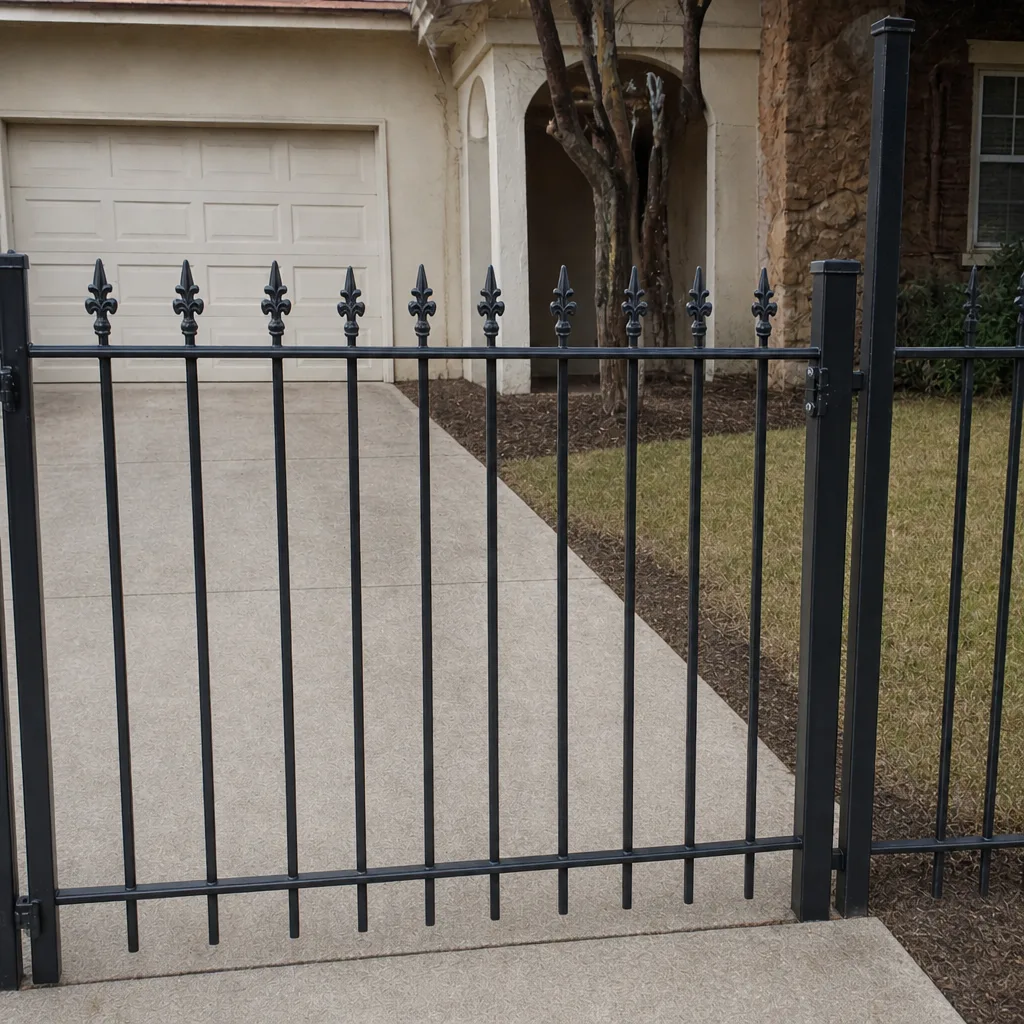
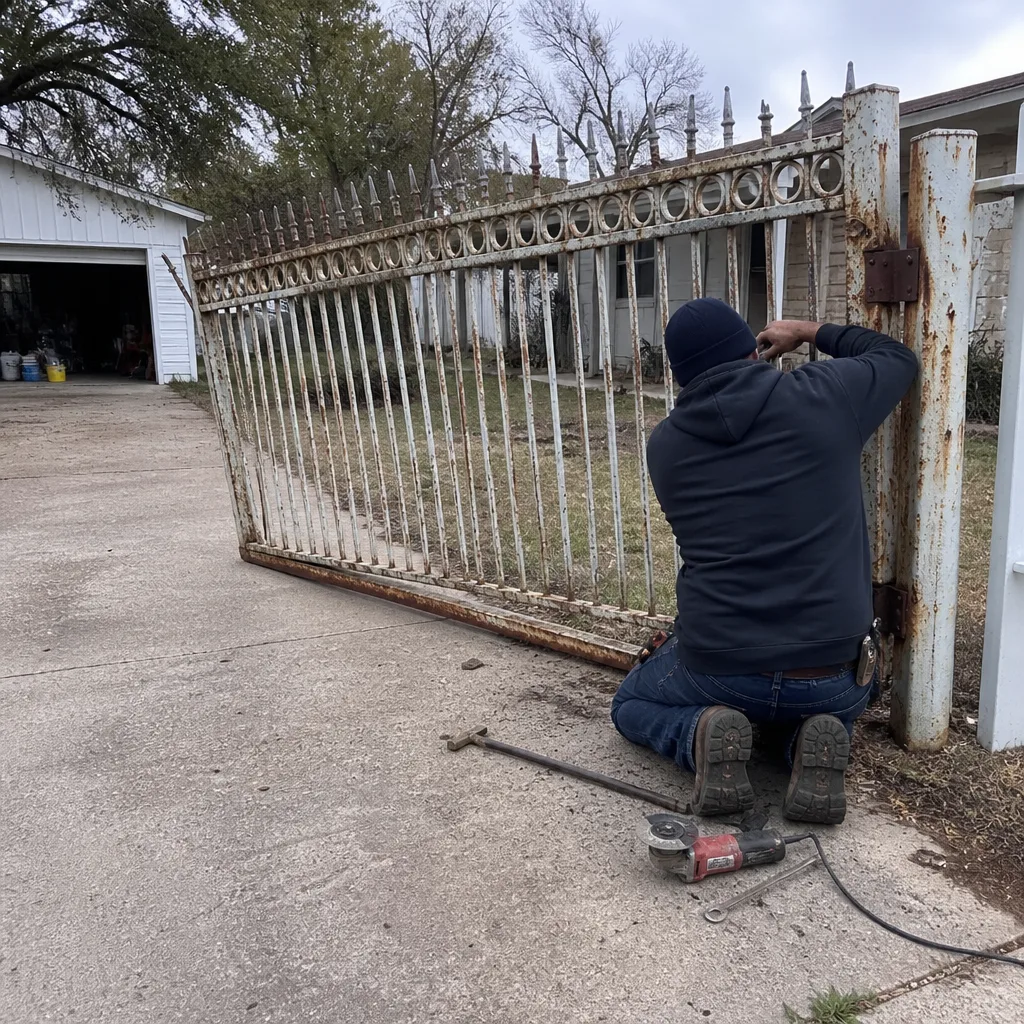 Before
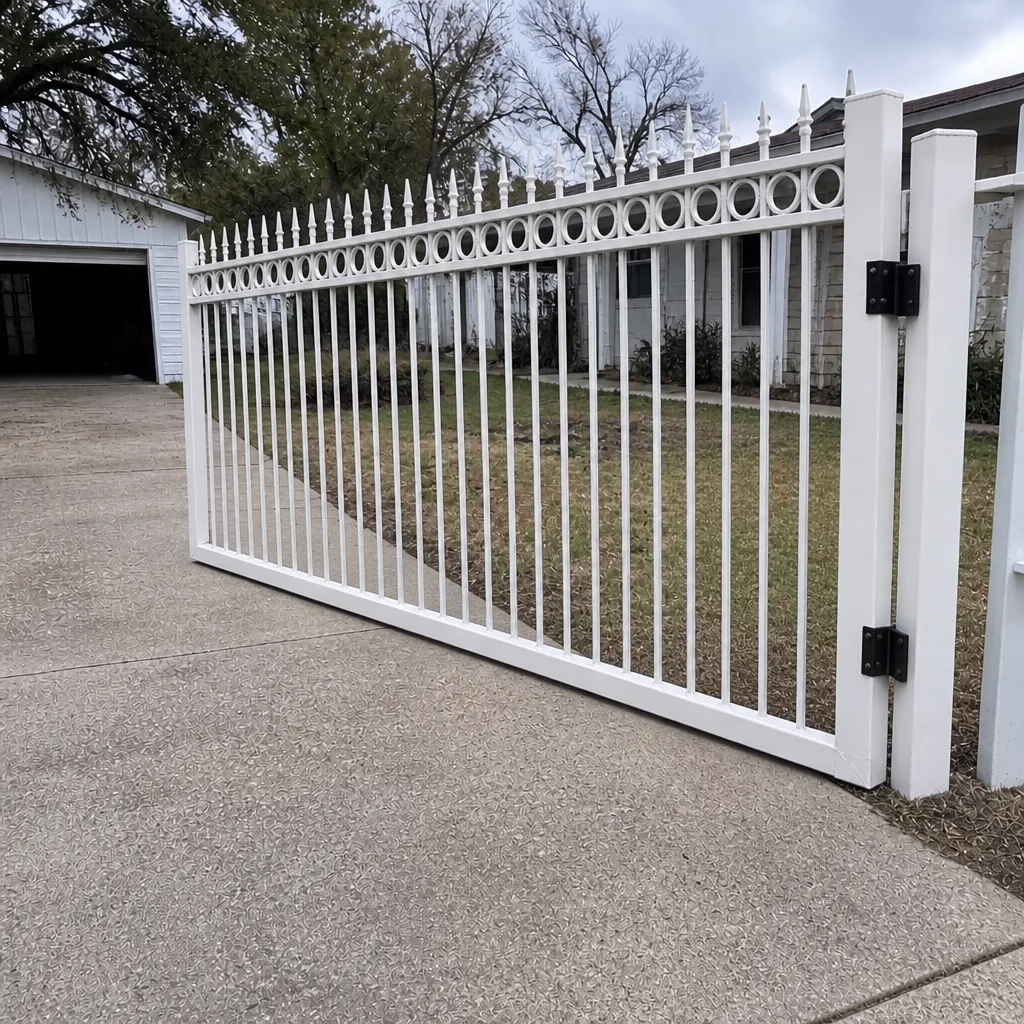 After
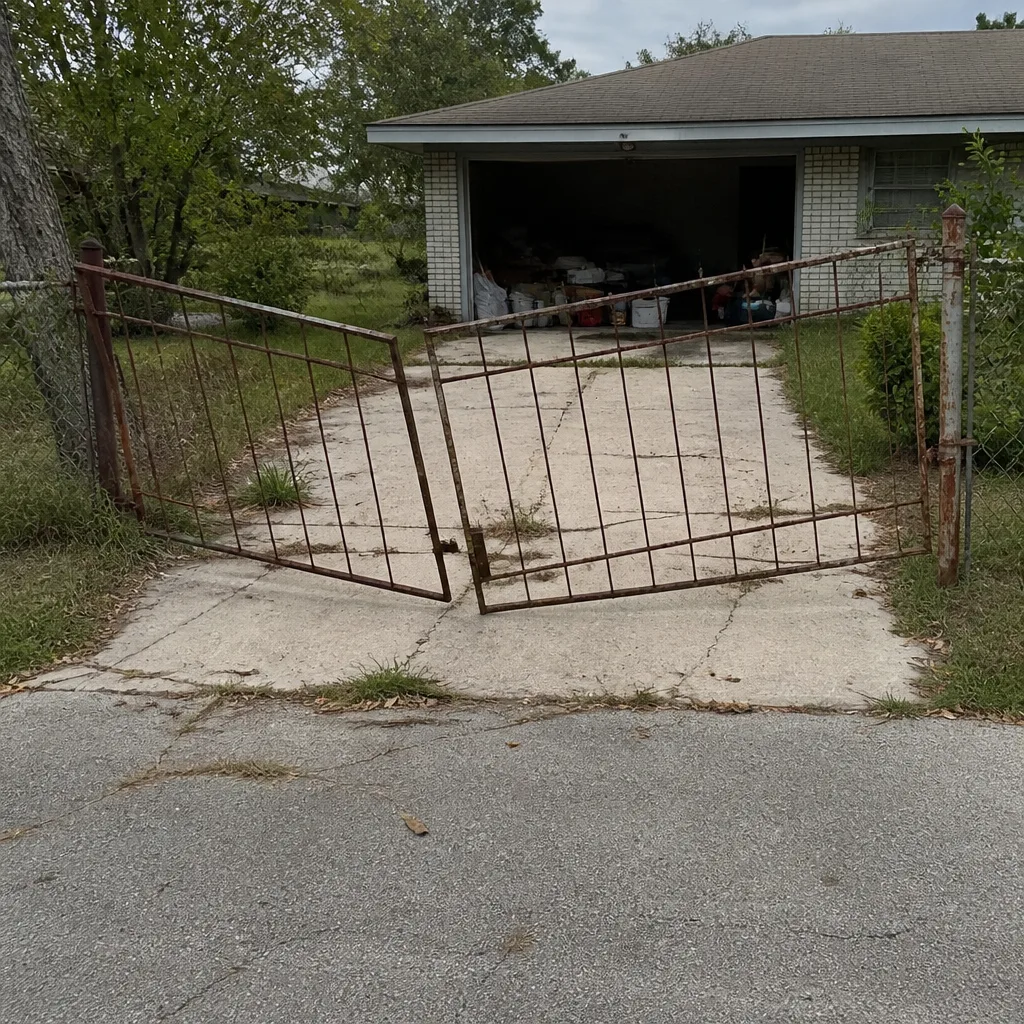
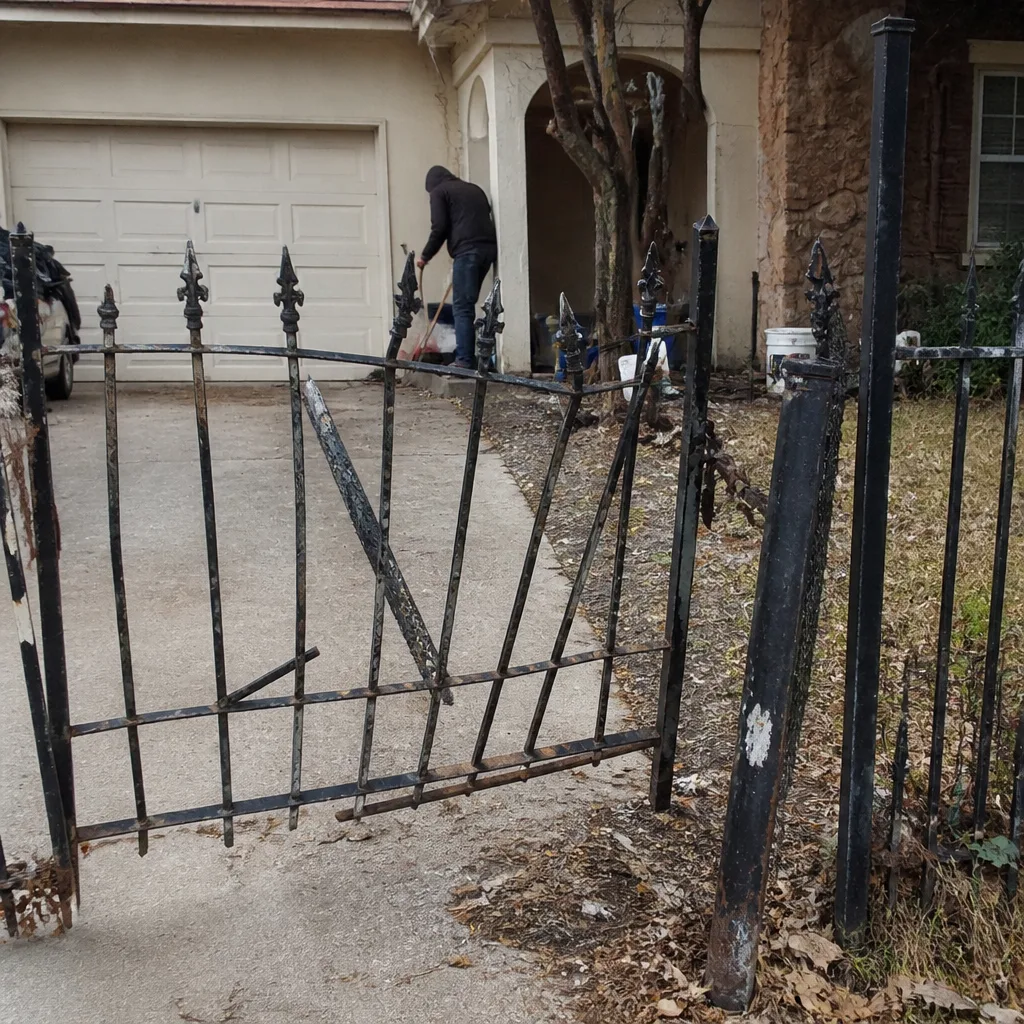 Before
 After
 Before
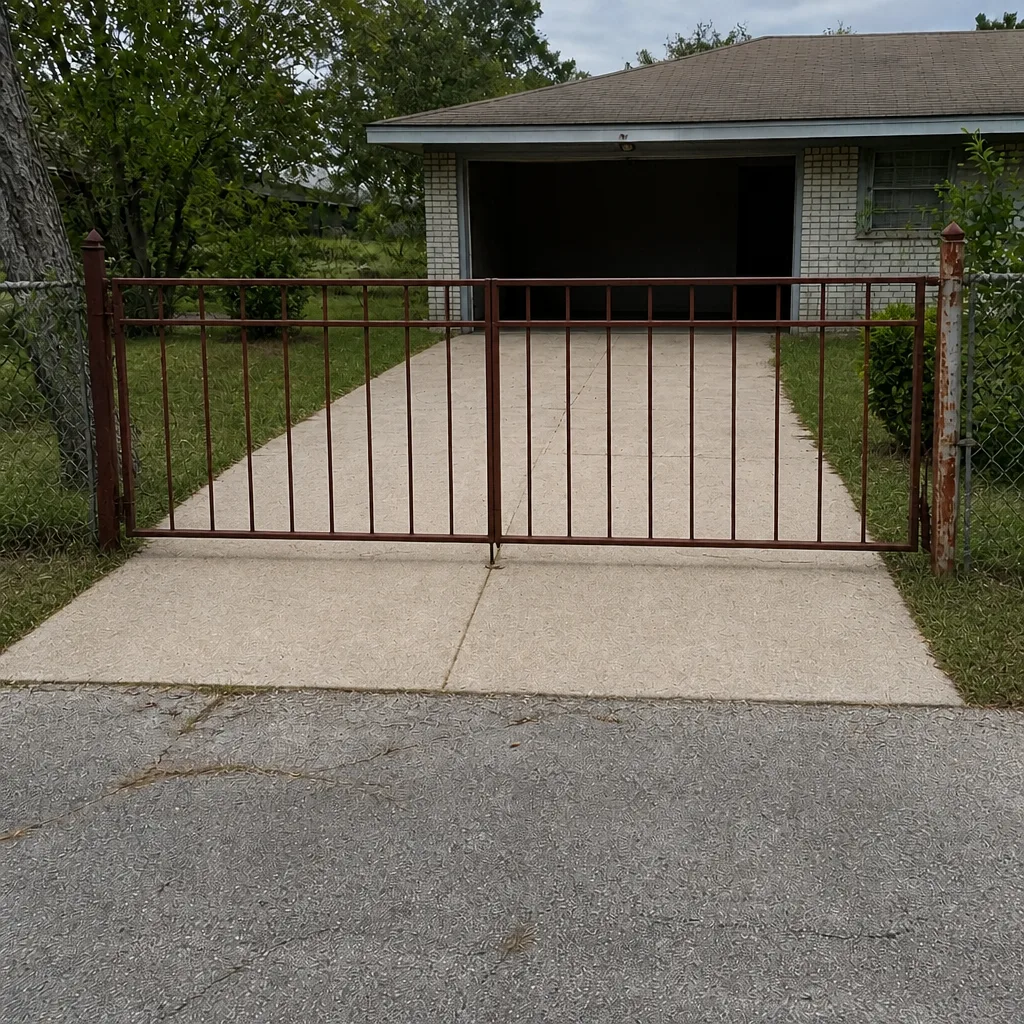 After
When to Call a Professional
Call a professional when the gate behaves erratically (reverses mid-travel, opens partway, closes on its own), when a safety device isn’t working, when the gate won’t move at all, or when you’ve replaced a part and the problem came back. Call when the gate drags or sags and the operator seems to be struggling. Call when you don’t know the brand or model of your operator and need a real diagnosis. And call before you replace anything based on a guess.
Gate Repair Killeen offers free estimates in Killeen. Call (866) 722-0161. We answer 24/7, with fast dispatch from 7am to 7pm, Sunday through Friday.
Frequently Asked Questions
A gate that reverses before closing is usually responding to a safety device: a misaligned or dirty photo eye, or a failed loop detector. It can also be a limit switch that has drifted out of position. Replacing the motor will not fix either cause. Have the safety devices and limit settings tested before anything else. Call (866) 722-0161 for an exact diagnosis; estimates are free.
Cleaning photo eye lenses and checking that the gate isn’t dragging are reasonable owner checks. Beyond that, no. Control boards, operator wiring, and safety loops are hazardous to work on and easy to get wrong, and a misdiagnosed board replacement is expensive. Leave the internals to a trained technician. Call (866) 722-0161 to book a diagnostic visit.
Heat stresses operator housings, control boards, and wiring insulation, and thermal expansion works on every terminal and connection. Control board failures cluster in hot months, and low-voltage wire buried in clay that dries and cracks takes added abuse. A board that fails in summer is often a heat-stress failure rather than a manufacturing defect. Call (866) 722-0161 to have the system checked before the next hot stretch.
We work on LiftMaster, FAAC, BFT, Linear, Viking, Ghost Controls, DoorKing, Elite, and Mighty Mule systems. We diagnose by brand logic, so we service your existing system rather than pushing a brand replacement. If your operator isn’t on that list, call us with the brand and model and we’ll tell you straight whether we can help. Call (866) 722-0161.
The price is set per job by a written estimate after we look at the gate, and the estimate is free. Costs depend on the brand, the failure category, and the parts involved, so a phone quote before diagnosis would be a guess. We quote and agree the price before any work starts. Call (866) 722-0161 for a free estimate.
Yes. We service residential driveway gates and commercial access systems, including commercial-oriented brands like DoorKing. Duty cycle, access hardware, and safety loops on commercial sites change the diagnosis, and we work through those in the same order as on a residential call. Call (866) 722-0161 to schedule an on-site estimate.
The Bottom Line
Most gate repair money is wasted chasing symptoms. A gate that reverses, opens partway, or ignores the remote is usually a control or safety-device problem, not a failed motor. Killeen’s clay soil moves gate posts and drags gates, and the heat cycle stresses control boards and wiring in ways generic guides don’t cover. Diagnose by root cause first: mechanical wear, electrical fault, or control failure. Know your brand, because LiftMaster and FAAC and BFT and Linear don’t fail the same way. And when a repair is a band-aid on an undersized system, a specialist tells you so. Diagnose first, replace only when necessary.
If your gate is failing and you want a real diagnosis rather than a guess, call Gate Repair Killeen at (866) 722-0161 for a free estimate. We’re gates only, we work on your brand, and the price is quoted and agreed before any work starts. We answer 24/7, with fast dispatch from 7am to 7pm, Sunday through Friday.
Written by the team at Gate Repair Killeen.